
2026 Best Fertilizer Urea Types for Global Buyers
For global buyers, choosing the right Fertilizer Urea in 2026 requires more than comparing quoted prices. Prilled urea may suit small-scale spreading and blended products, while granular urea often offers better handling through automated equipment. Coated or stabilized grades can reduce nitrogen losses under specific soil, weather, and application conditions. However, these benefits are not universal. Local rainfall, temperature, soil pH, crop demand, and spreading technology can change the final result.
A reliable purchasing decision should connect product specifications with field experience. Buyers should review nitrogen content, biuret level, moisture, particle size, crushing strength, coating materials, packaging, and shelf-life data. A recent certificate of analysis matters. So does traceability from the manufacturing site to the destination port. Bulk cargo may reduce packaging costs, but bags can protect product quality in humid storage areas. Small details matter.
Not every supplier presents information equally clearly. This creates risk. Independent laboratory testing, documented quality systems, and transparent shipping records can support more confident decisions. Buyers should also confirm import rules, labeling requirements, environmental standards, and safe storage guidance in each market. The cheapest offer may become expensive after caking, dust losses, port delays, or rejected specifications. That lesson is easy to overlook.
This guide compares major Fertilizer Urea types for international purchasing. It considers performance, logistics, quality evidence, and practical suitability. Some recommendations remain conditional, because farming conditions differ widely. A careful buyer should question broad claims, test products when possible, and match each grade with real operational needs.
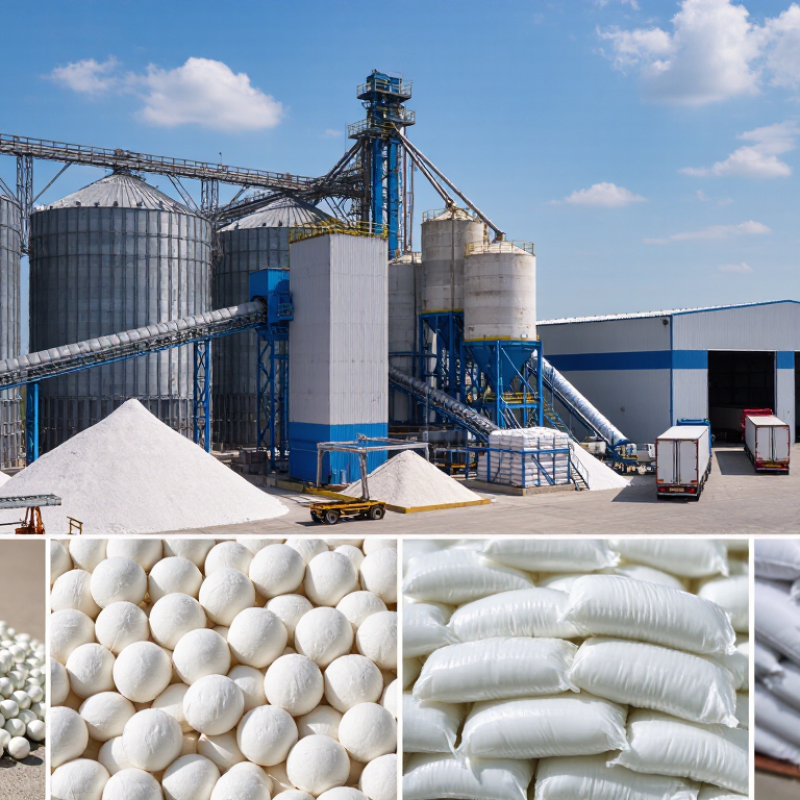
Urea Fertilizer Basics and Its Role in Global Agriculture
Urea is a concentrated nitrogen fertilizer containing 46% nitrogen by weight. One metric ton supplies approximately 460 kilograms of nitrogen. Soil microbes convert urea into ammonium and nitrate, forms that crops can absorb. The process needs moisture, warmth, and suitable soil conditions. Without incorporation or rainfall, surface-applied urea can lose nitrogen as ammonia gas. The International Fertilizer Association identifies nitrogen as the largest segment of global fertilizer demand. FAOSTAT reported global fertilizer nutrient use at roughly 185 million tonnes in 2022.
The best urea type depends on climate, equipment, crop timing, and transport distance. Prilled urea dissolves quickly and suits many standard field applications. Granular urea usually offers better handling and spreading performance over wide fields. Coated or stabilized urea can slow nitrogen release or reduce urease-related losses. These products may improve efficiency, but results vary sharply with soil and weather. A product label alone cannot predict field performance.
The OECD-FAO Agricultural Outlook 2024–2033 expects continued agricultural input demand as food production expands, especially in developing markets. Buyers should check nitrogen content, biuret levels, particle size, moisture, dust, packaging strength, and certificate accuracy. A shipment that looks acceptable may spread unevenly. That practical detail matters. I once treated “46% nitrogen” as the complete purchasing answer; it was not. Application method, storage humidity, and local regulations can change the real agronomic value. Clear test reports and independent inspection remain essential for reliable international procurement.
2026 Best Fertilizer Urea Types for Global Buyers - Urea Fertilizer Basics and Its Role in Global Agriculture
| Urea Type | Typical Nitrogen Content | Physical Form | Nitrogen Release Pattern | Typical Agricultural Uses | Main Advantages | Key Limitations | Best Buyer Considerations |
|---|---|---|---|---|---|---|---|
| Standard Prilled Urea | Approximately 46% N | Small, rounded prills; commonly about 1–3 mm | Rapidly dissolves when moisture is available; nitrogen is converted through hydrolysis, ammonium formation and nitrification | Field crops, pasture, horticulture and blended fertilizers | High nitrogen concentration, generally easy to dissolve and suitable for many fertilizer blends | Surface application can result in ammonia volatilization, particularly on alkaline, wetting-and-drying or residue-covered soils | Check prill size distribution, moisture resistance, biuret level, caking tendency and compatibility with intended blends |
| Granular Urea | Approximately 46% N | Larger, harder granules; size varies by specification | Dissolves after rainfall or irrigation; generally performs similarly to prilled urea when particle size and application conditions are comparable | Mechanized spreading, broad-acre crops, dry fertilizer blends and bulk distribution | Better suitability for some high-capacity spreaders and improved resistance to dust during handling | Uneven particle size can reduce spreading uniformity; surface losses remain possible without incorporation or timely rainfall | Evaluate granule hardness, size range, crush strength, dust content, spreader working width and storage stability |
| Urea with a Urease Inhibitor | Usually close to 46% N before accounting for additive formulation | Prills or granules treated or formulated with a urease-inhibiting additive | Slows the initial conversion of urea and can extend the period before ammonia losses occur | Surface-applied nitrogen on pasture, cereals, oilseeds and other crops where incorporation is difficult | Can reduce ammonia volatilization risk when application is followed by delayed rainfall or irrigation | Performance depends on temperature, soil, residue, moisture, inhibitor rate and time until rainfall; it does not eliminate all nitrogen losses | Confirm additive type, guaranteed inhibitor concentration, treatment uniformity, regulatory status and expected protection period |
| Urea with a Nitrification Inhibitor | Typically near 46% N, depending on formulation | Treated granules or a combined nitrogen formulation | Slows the conversion of ammonium nitrogen to nitrate, potentially retaining more nitrogen in ammonium form for longer | High-rainfall systems, irrigated crops and situations with elevated nitrate leaching or denitrification risk | May reduce nitrate movement and denitrification under suitable soil and weather conditions | Does not primarily address ammonia volatilization; effectiveness varies with soil temperature, moisture and inhibitor persistence | Review local registration, active ingredient, recommended application window, temperature range and compatibility with crop programs |
| Polymer-Coated Controlled-Release Urea | Commonly about 38–44% N, depending on coating weight | Urea granules covered with a polymer coating | Water enters the coating and dissolved urea diffuses out gradually; release is influenced by temperature and coating design | Turf, nursery production, landscaping, horticulture and selected high-value crops | Fewer applications may be needed; can improve nutrient timing and reduce short-term salt or loss risks | Higher cost per unit of nitrogen; release duration can differ from expectations under unusual temperatures or moisture conditions | Compare release duration, temperature response, coating integrity, residual coating requirements and total cost per delivered kilogram of N |
| Sulfur-Coated Urea | Often about 30–40% N, with sulfur content varying by product | Urea granules coated with elemental sulfur, sometimes sealed with an additional coating | Release occurs through coating imperfections and gradual coating breakdown; timing is less uniform than many polymer systems | Turf, horticulture and soils where both nitrogen and sulfur are required | Supplies nitrogen and elemental sulfur in one granule and may provide a slower release than uncoated urea | Release uniformity can vary; coating damage during handling may cause premature dissolution | Check sulfur analysis, coating percentage, release profile, granule durability and whether the soil actually needs sulfur |
| Urea Formaldehyde or Methylenurea | Often approximately 38–40% N, depending on the ratio of quick- and slow-release fractions | Granules, powders or formulated controlled-release materials | Microbial breakdown releases nitrogen over time; release depends on chemical chain length, temperature, moisture and microbial activity | Turf, ornamentals, nursery crops and specialty horticulture | Longer nutrient availability and lower application frequency in suitable growing conditions | Generally lower nitrogen density than standard urea; release may be slow in cool or biologically inactive soils | Request water-soluble nitrogen, cold-water-insoluble nitrogen and release specifications rather than relying only on total nitrogen |
| Fertilizer-Grade Urea for Industrial or Technical Use | Approximately 46% N when sold as agricultural urea | Prilled or granular material, depending on the required process and specification | Rapidly dissolving nitrogen source; agricultural performance depends on application method | Bulk agricultural supply, fertilizer blending and selected non-fertilizer processes subject to applicable specifications | High nitrogen concentration and broad international availability | Technical grades may not meet crop, blending or regulatory requirements for every agricultural application | Verify intended end use, purity, biuret, moisture, particle size, anti-caking treatment and documentation before purchase |
Core Urea Purchasing and Application Data
| Data Dimension | Typical or General Value | Why It Matters to Global Buyers |
|---|---|---|
| Nitrogen concentration of standard urea | Approximately 46% nitrogen by weight | A 50 kg bag of standard urea contains approximately 23 kg of nitrogen before accounting for minor impurities or formulation differences |
| Nitrogen form at application | Urea nitrogen; it must be transformed in soil before becoming predominantly ammonium and nitrate | Crop availability, loss pathways and application timing depend on soil moisture, temperature, pH and microbial activity |
| Ammonia volatilization risk | Higher when urea remains on the soil surface, especially under alkaline conditions, warm weather, high residue cover and delayed rainfall | Incorporation, irrigation or timely rainfall can reduce losses; urease inhibitors may help when incorporation is impractical |
| Recommended storage environment | Dry, covered, well-ventilated and protected from rain, condensation, flooding and direct contact with the floor | Urea is hygroscopic; moisture can cause caking, handling problems and reduced spreading quality |
| Blend compatibility | Compatibility varies with moisture sensitivity, particle size, density and chemical properties | A compatibility check is important before blending with ammonium nitrate, phosphate, potash, micronutrients or treated products |
| Application efficiency | Depends on correct rate, uniform spreading, weather, soil conditions and crop demand | The best product is not determined by nitrogen percentage alone; delivery timing and loss management affect value and crop response |
| Common quality checks | Total nitrogen, biuret, moisture, particle-size distribution, crush strength, dust, caking tendency and appearance | These parameters influence crop safety, storage, transport, blending and accurate field application |
Note: Values are typical industry ranges and may vary by formulation, national standard, production specification, coating system and intended use. Buyers should confirm the current technical data sheet, certificate of analysis, local registration and application recommendations before purchase.