
Choosing the right Cat Patio Catio in 2026 requires more than comparing attractive photos. Global buyers face different climates, housing layouts, shipping conditions, and installation expectations. A sunny balcony in Spain needs different protection from a snowy garden in Canada. Coastal homes also demand stronger corrosion resistance. This guide introduces leading catio types for indoor, outdoor, and compact living spaces.
Freestanding catios offer flexible placement and generous exercise room. Attached catios connect directly to a window or door, creating a safer route between home and enclosure. Balcony catios suit apartment owners, while window-mounted designs save space. Modular systems can expand later with tunnels, shelves, ramps, and shaded resting boxes. Look for welded or tightly secured mesh, smooth edges, stable anchors, weather-resistant roofing, and doors that support controlled access.
Practical experience matters here. A lightweight frame may look convenient, yet strong wind can expose weak connections. A beautiful wooden model may need frequent sealing in humid regions. Buyers should check measurements, ventilation, cleaning access, replacement parts, and assembly instructions before ordering. Animal welfare guidance also supports shade, shelter, climbing choices, and enough room for natural movement. No design wins everywhere. Some rankings remain debatable because budget, climate, cat size, and housing rules change the decision. The most reliable choice balances safety, durability, comfort, maintenance, and local installation realities. This overview helps international buyers compare promising 2026 options with clearer expectations, while recognizing that even a well-designed catio may need thoughtful adjustments after real-world use.
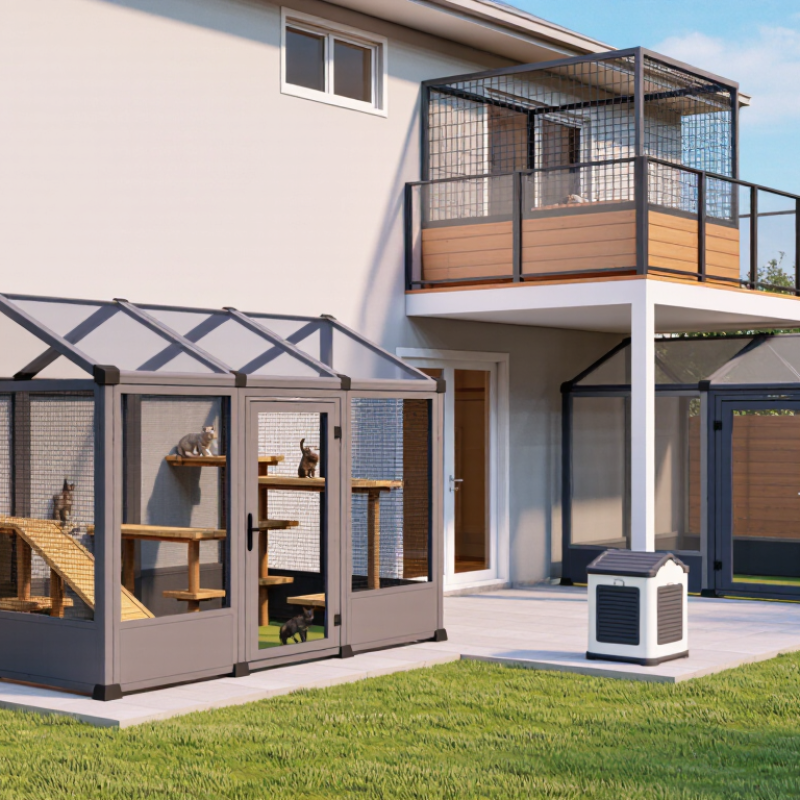
A catio is more than a screened outdoor box. It creates controlled access to fresh air, daylight, climbing space, and safe observation.
FEDIAF’s 2024 European Pet Food Industry Facts and Figures report estimates 108 million cats live in Europe. That scale shows why practical outdoor enrichment matters to global buyers. The purpose is simple: expand a cat’s environment without exposing it to traffic, predators, toxic plants, or unwanted escapes.
Use stable shelves, ramps, shaded platforms, and separate resting levels. Wire openings should prevent head entrapment, while doors need reliable latches and smooth edges. Ventilation matters, especially in humid or hot regions. A roof protects cats from rain and harsh sun, but it should not block all daylight.
The American Pet Products Association’s 2024 housing research continues to show strong pet ownership in the United States, where millions of households need space-conscious solutions. Measure the installation area carefully.
Powder-coated metal, UV-resistant mesh, sealed timber, and corrosion-resistant fasteners can improve service life. Inspect joints after storms. Small mistakes become expensive. No design is perfect.
Cats differ in age, confidence, and climbing ability, so observe their behavior before adding height. An elderly cat may prefer a low shelf and warm mat.
A young cat may need more vertical routes and puzzle features. Buyers should also check local building and property rules before installation.
Patio catios create a safe outdoor room beside a home. A covered frame can protect cats from harsh sun, rain, and falling leaves. In my installations, cats used platforms more often than open floor space. Add shelves at different heights, a scratching post, and a shaded resting box. Fine mesh improves safety without blocking fresh air. Check balcony railings carefully. Small gaps can become dangerous escape points. Balcony catios should use weighted bases or secure brackets approved for the building.
Window catios suit apartments with limited outdoor space. They attach outside a window and provide a compact viewing area. Cats often spend long periods watching birds, traffic, or moving branches. Use weather-resistant panels and smooth edges. The window must remain easy to close during storms. This detail is often overlooked. I once planned a narrow design that looked efficient, but the cleaning access was poor. The revised version included a hinged panel and removable flooring.
Garden catios offer the most room for climbing and movement. They can connect to a door tunnel or stand independently on firm ground. Include natural shade, elevated walkways, and a dry shelter. Avoid toxic plants and unstable decorations. Local weather, soil conditions, and household routines should guide the structure. Buyers should also check property rules before installation. A beautiful catio can still fail if maintenance becomes inconvenient. Think about drainage, rust prevention, and daily access for cleaning. Cats may prefer simple spaces. Humans often overdesign them.
Global catios in 2026 include window boxes, balcony enclosures, and freestanding outdoor rooms. Each type suits different homes, climates, and cat habits. A window catio saves space but offers limited movement. A freestanding structure allows climbing shelves, shade, and separate resting areas. Measure the cat’s route, not only the available floor space.
Choose powder-coated metal, treated timber, or weather-resistant composite panels for the frame. Use strong, small-gap mesh that resists bending and prevents paws from escaping. In hot regions, add a roof overhang, ventilation gaps, and shaded platforms. In cold or wet climates, raised flooring and sealed joints reduce moisture problems. Avoid sharp edges and materials that become dangerously hot under direct sunlight.
Access deserves careful planning. A secure window insert works for supervised use, while a tunnel supports independent movement between the house and catio. Double-door entry reduces escape risks during cleaning. Check every latch. Sliding panels may feel convenient, but cats can exploit tiny gaps. A reliable setup also needs stable flooring, covered hiding spaces, and regular inspections after storms. In practical projects, owners often underestimate cleaning access. I would reconsider any design that cannot be opened safely by one adult. Bigger is not always better; unused corners can become dusty, stressful, and difficult to inspect. Local building rules and apartment policies should also be checked before installation.
| Catio Type | Typical Size Guidance | Recommended Materials | Key Safety Features | Cat and Human Access Options | Climate and Installation Suitability | Maintenance Considerations |
|---|---|---|---|---|---|---|
| Window Box Catio | Approximately 0.6–1.5 m wide, 0.5–1.0 m deep, and 0.6–1.2 m high. Suitable for one or two cats during short outdoor sessions. | Galvanized or powder-coated steel mesh, weather-resistant timber or aluminum framing, exterior-grade panels, and a solid waterproof floor. | Small welded mesh openings, secure window connection, escape-resistant door, rounded or protected edges, and a roof that prevents climbing out. | Cat access through a secured window insert or cat flap. Human access is normally through a hinged front panel or removable roof. | Good for apartments and small homes. Add a shaded roof and drainage in hot or rainy regions. Check that the window and wall can support the load. | Inspect fasteners and mesh quarterly. Clean the floor and check for water accumulation after heavy rain. |
| Balcony Catio | Uses part or all of an existing balcony. Common depth is about 1.0–2.0 m, with height determined by the balcony enclosure. | Use corrosion-resistant metal mesh, aluminum or treated timber framing, UV-resistant roof panels, and non-slip flooring. | Fully enclosed sides and ceiling, no gaps wider than the chosen mesh specification, locked access door, protected railing gaps, and independent anchoring. | Cat flap from the room to the balcony enclosure. A full-height human door is preferred for cleaning and emergency access. | Suitable for urban apartments where building rules permit alterations. Provide shade, airflow, wind protection, and rain drainage. | Check balcony drains, anchors, door hinges, and mesh corrosion. Avoid blocking required fire exits or shared drainage paths. |
| Freestanding Patio Catio | Approximately 2–6 m² for a compact unit; 6–15 m² for a multi-cat enclosure. Height is commonly 1.8–2.4 m for walk-in designs. | Hot-dip galvanized or powder-coated steel, aluminum, pressure-treated or naturally durable timber, welded wire mesh, and polycarbonate or metal roofing. | Secure foundation or ground anchors, double-door entry for escape prevention, roof enclosure, tamper-resistant latches, and stable climbing platforms. | Cats may enter through a wall-mounted flap, tunnel, or enclosed walkway. Humans use a lockable walk-in door. | Flexible for gardens, patios, and courtyards. Use deeper footings in frost-prone areas and stronger anchoring in regions with high winds. | Remove leaves and waste regularly. Recoat exposed timber as needed and inspect ground anchors, roof panels, and mesh connections annually. |
| Wall-Mounted Catio | Usually 1–4 m², with a depth of about 0.6–1.2 m. Best for narrow yards, terraces, and exterior walls with suitable structure. | Lightweight aluminum or steel framing, welded mesh, exterior-grade composite panels, and waterproof roofing materials. | Structural wall anchoring, secondary support brackets, enclosed top, secure cat flap, smooth internal surfaces, and no climb-out points near the roof. | Direct access through a wall or window cat flap. Human access is usually through a lockable front panel or side door. | Works well where ground space is limited. Wall condition, insulation, local wind exposure, and rain runoff must be assessed before installation. | Inspect wall penetrations, sealant, brackets, and roof joints. Look for movement or cracking after storms and temperature changes. |
| Catio Tunnel or Runway | Commonly 0.6–1.0 m wide and 0.8–1.8 m high. Length can range from 2 m to more than 10 m depending on the property. | Galvanized wire mesh, aluminum or timber supports, weather-resistant connectors, and a solid or partially solid roof for shade. | Continuous mesh enclosure, protected corners, frequent support points, secure connections between sections, and no openings near fences or trees. | Connects a home, window box, balcony, or patio enclosure. Include service gates or removable panels for human access. | Useful for connecting separate outdoor areas. Add wind breaks in exposed locations and shaded sections in high-sun climates. | Inspect every joint and support point. Keep vegetation trimmed away from the mesh and remove debris that could obstruct the route. |
| Covered Patio Enclosure | Approximately 6–20 m² or more. A height of 1.8–2.4 m allows comfortable human movement and enrichment for several cats. | Aluminum or galvanized steel framing, welded mesh, UV-resistant roofing, waterproof flooring, and washable wall or wind panels. | Roof-to-floor enclosure, double-door vestibule, lockable human door, secure perimeter connection, stable shelves, and separated resting zones. | Direct cat flap from the home plus a full-size human door. A small service hatch can simplify cleaning and feeding. | Suitable for households wanting extended outdoor use. Plan ventilation, shade, rain protection, snow-load capacity, and drainage for local conditions. | Wash hard surfaces regularly, inspect roof seals, clean drainage channels, and check for corrosion or timber decay at least twice a year. |
| Portable or Modular Catio | Individual modules are often 0.8–1.5 m wide and 1.5–2.0 m high. Modules can be combined as the household or space changes. | Lightweight aluminum or coated steel frames, modular wire panels, weather-resistant connectors, and removable waterproof covers. | Panel locks, anti-tip feet or anchors, enclosed roof panels, secure joining clips, and a base that prevents digging or squeezing underneath. | Cats enter through a compatible flap, carrier door, or connecting tunnel. Human access is provided by a removable or hinged panel. | Convenient for renters or seasonal use. It should be anchored during wind and stored or reinforced during severe weather. | Check panel joints every time the unit is moved. Clean removable covers and replace bent or damaged panels promptly. |
| Indoor-Outdoor Sunroom Catio | Commonly 4–12 m², with enough floor area for litter, water, resting platforms, and movement without crowding. | Insulated wall sections, aluminum or treated timber frames, welded mesh ventilation areas, durable flooring, and UV-filtering glazing or roof panels. | Escape-resistant doors, child-safe and cat-safe locks, protected electrical wiring, non-toxic finishes, ventilation, and temperature monitoring. | Permanent cat flap or internal door connection. A human-sized door should allow emergency access and easy cleaning. | Better for colder or highly variable climates when properly insulated and ventilated. Avoid overheating by providing shade and cross-ventilation. | Clean glazing and screens, inspect seals, monitor humidity and temperature, and check flooring for moisture damage. |
Size ranges are general planning guidance rather than building-code requirements. Before installation, verify local planning rules, balcony load limits, landlord permissions, electrical safety requirements, and wind, snow, rain, and temperature conditions.
2026 Top Cat Patio Catio Types for Global Buyers
Catios are becoming practical enrichment spaces, not decorative cages. FEDIAF’s 2024 Facts and Figures report counted about 108 million cats across Europe. APPA’s 2024–2025 National Pet Owners Survey also reported nearly 50 million U.S. cat-owning households. These figures support growing demand for safer outdoor access.
Permanent catios suit homeowners wanting year-round strength. They use fixed posts, weather-resistant roofing, and secure door connections. However, installation may require more space, labor, and maintenance. Modular catios offer flexible panels and expandable layouts. They work well for renters with permission or families expecting changes. Portable models fold, move, or store easily. They suit balconies, travel, and seasonal use, but lighter frames can shift in wind. Custom catios solve awkward spaces, including narrow patios and multi-level gardens. They usually cost more and require accurate measurements.
Tips: Check mesh spacing, roof shade, drainage, and escape points before purchase. Place platforms near windows, but avoid slippery surfaces. A 2023 review in Animals linked enriched environments with better feline activity and welfare indicators. Still, one report cannot prove every cat prefers outdoor structures. My practical view is simple: test a small setup first. Observe jumping, hiding, scratching, and weather tolerance. Then choose permanent, modular, portable, or custom construction based on those real behaviors.
This comparison uses a practical 1–5 index, where 1 is low and 5 is high. Permanent and custom catios generally provide stronger weather resistance and long-term stability, while portable catios prioritize mobility and simple installation. Modular systems balance flexibility with durability.
2026 Top Cat Patio Catio Types for Global Buyers?
A practical catio may be a window box, balcony enclosure, or freestanding outdoor run. Choose the type after checking wind, rain, heat, and winter exposure. The IPCC Sixth Assessment Report links climate change with more frequent extreme heat events. Therefore, mesh alone is not enough. Add shade, airflow, raised flooring, and a dry retreat. In humid regions, stainless fasteners and powder-coated frames usually resist corrosion better. FEDIAF’s 2024 European Pet Population report recorded 139.6 million pet-owning households in Europe, showing strong demand for safer outdoor pet spaces.
Installation quality matters more than appearance. Anchor freestanding structures to stable ground, but avoid blocking drainage routes. Balcony projects may require landlord approval, structural review, or local planning permission. The 2024 International Residential Code also shows why attachment, guard openings, and load conditions need local verification. Rules differ widely between cities and countries. Do not assume a “temporary” enclosure avoids approval. That assumption can be costly. Maintenance should include weekly mesh checks, monthly fastener inspections, and seasonal cleaning. Replace damaged panels quickly. Cats test weak points quietly.
Tips: Place the entrance away from prevailing rain. Use two exit routes where possible. Measure the cat, not only the patio. A useful mistake to avoid is choosing a narrow tunnel first, then discovering that cleaning equipment cannot enter. Keep records of materials, anchors, and inspection dates; they help during repairs and regulatory questions.