Cuddon Freeze Dry Logo

7 Tips for Choosing a Freeze Dry Food Machine

Choosing a Freeze Dry Food Machine is a practical decision, not a purchase based on impressive photos alone. The right model should match your kitchen space, batch size, food types, and daily routine. A machine that looks powerful may become frustrating if it is noisy, slow, or difficult to clean.

This guide shares seven useful tips drawn from common user experiences and equipment evaluation practices. Capacity matters, but usable tray space matters more. A family may need different storage than a small farm or test kitchen. Check the vacuum pump, temperature control, drying cycles, electrical requirements, and included accessories. Read the manufacturer’s manual carefully. Reliable documentation often reveals more than advertising claims.

Small details matter.

Observe the door seal and tray design. These parts affect loading, cleaning, and long-term performance. Energy use also deserves attention because repeated cycles can increase operating costs. Customer support, warranty terms, replacement parts, and service availability should be evaluated before payment. A low price may not remain low after maintenance needs appear.

Some assumptions need reconsideration. A larger chamber is not automatically better. More capacity can mean higher energy use and heavier handling. Likewise, advanced controls may add convenience, but they can also create a learning curve. Personal experience, product specifications, and independent reviews should be compared carefully. No single machine suits every household. These seven tips can help buyers ask better questions, avoid rushed decisions, and choose equipment that performs reliably in real conditions.
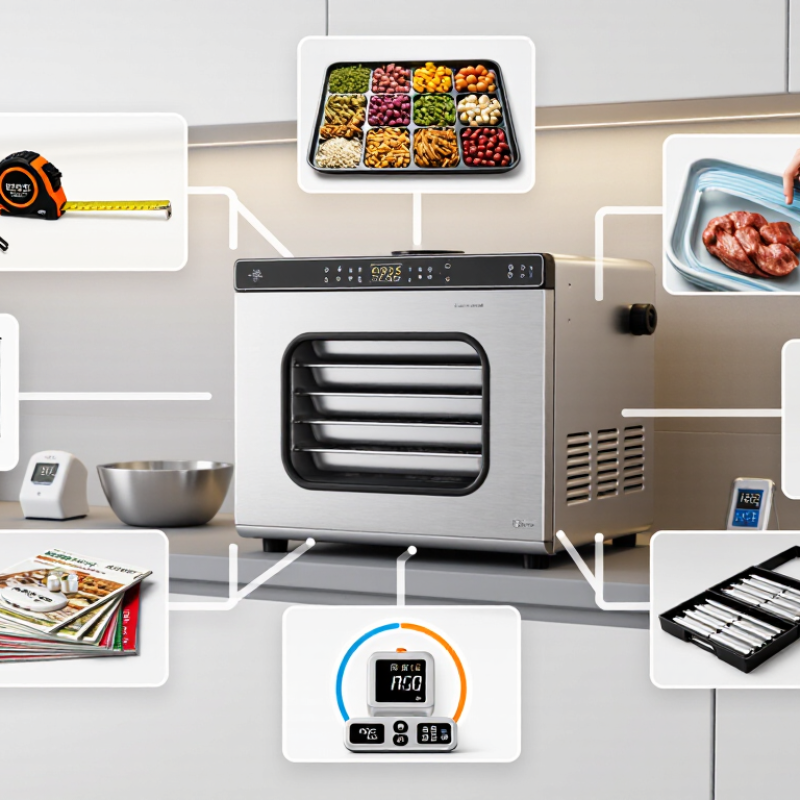
7 Tips for Choosing a Freeze Dry Food Machine

Define Your Freeze-Drying Needs and Expected Batch Size

Choosing a freeze-drying machine starts with defining your real production needs. Are you preserving family meals, garden harvests, or preparing regular commercial batches? Each purpose requires different capacity, controls, and cleaning routines. Write down the food types, weekly frequency, and desired storage volume.

Estimate batch size by wet food weight, not chamber volume alone. A tray holding diced fruit may process differently from one holding cooked meat. Measure the food before loading, then allow space between pieces for airflow. A crowded tray can produce uneven drying, leaving soft centers and reducing storage reliability. Record drying time, food weight, and final texture for several batches. This creates useful evidence when comparing machines.

I once underestimated how quickly small harvests could accumulate. The machine seemed large enough, but preparation became the bottleneck. Cutting, pre-freezing, loading, and unloading required more time than expected. That mistake changed my planning. Now I calculate both machine capacity and handling time. For occasional use, a smaller unit may reduce waste and maintenance. For frequent production, extra shelf area can protect your schedule. Ask whether the machine can handle your heaviest expected batch, not only your average one. Leave room for seasonal peaks. Forecasting is imperfect, so review your records after a month and adjust your estimate.

Compare Machine Capacity, Cycle Time, and Food Preparation Options

Choosing a freeze-dry food machine starts with realistic capacity, not the largest number in a product description. Estimate your weekly harvest, cooked meals, or fruit supply. A machine that holds 8 kilograms may process less after trays, spacing, and moisture levels are considered. Measure usable tray space carefully.

Cycle time also affects daily output. A batch may require 20 to 40 hours, depending on water content, slice thickness, and pre-freezing. Meat and dense meals often take longer than berries or herbs. Ask whether the cycle can be adjusted manually. Shorter is not always better. Insufficient drying can leave soft centers and shorten storage life.

Preparation options deserve close attention. Check whether the trays accept liquids, sauces, small pieces, and uneven portions. A removable tray system can make cleanup easier after sticky foods. Cut food into similar sizes for more even drying.

I once loaded mixed fruit without checking thickness, and the small pieces finished hours earlier. That mistake wasted energy and made testing the final texture harder.

Look for temperature controls, moisture sensors, and clear cycle records. Also consider electrical needs, noise, cleaning access, and replacement parts. A machine that fits your kitchen but cannot handle your usual recipes may become expensive shelf space.

Evaluate Freezing Performance, Vacuum Strength, and Drying Consistency

Choosing a freeze-dry food machine starts with freezing performance. A 2022 review in Foods reports that effective ice-crystal control commonly requires product temperatures below −30°C. Faster freezing usually creates smaller crystals and better texture. Ask for pull-down test results, not only the advertised temperature. A useful test should record chamber temperature, shelf temperature, and load weight over time.

Vacuum strength matters during sublimation. Technical guidance from the International Institute of Refrigeration places many freeze-drying cycles near 0.1–0.5 mbar, depending on the product and shelf temperature. A strong pump should reach its rated vacuum under a real food load. Empty-chamber readings can mislead. Measure leak rate, ultimate pressure, and recovery time after loading. Watch the gauges. Small leaks may extend drying and increase energy use.

Drying consistency is harder to judge. A 2023 review in the Journal of Food Engineering notes that uneven shelf temperature can produce different moisture levels within one batch. Check temperature uniformity across corners and the center. Request independent moisture tests, ideally using several samples from each tray. The Codex General Principles of Food Hygiene also emphasizes process control and records for food safety. Keep batch logs, though many small operators neglect them. I would also test dense fruit beside thin slices; one machine may handle them very differently. Claims need evidence. Real measurements matter.

7 Tips for Choosing a Freeze Dry Food Machine - Evaluate Freezing Performance, Vacuum Strength, and Drying Consistency

Tip Evaluation Dimension What to Check Practical Reference Point Simple Verification Method Warning Signs
1 Freezing Performance Review the lowest shelf or product temperature, freezing speed, shelf temperature control, and whether food freezes evenly across the chamber. A chamber capable of reaching approximately -40°C or lower is commonly suitable for household freeze-drying applications. Faster, uniform freezing generally produces smaller ice crystals and better texture. Run equal-size food portions on different trays. Compare the time required for the centers of the thickest pieces to become fully frozen. Large differences in freezing time between trays, visible soft centers, or substantial frost concentrated in one area.
2 Vacuum Strength and Stability Check the ultimate vacuum specification, operating pressure, pump capacity, and the machine’s ability to hold a stable vacuum during the drying cycle. Freeze drying commonly operates at pressures below 1,000 mTorr; many cycles use several hundred mTorr or less. The exact set point depends on the food and equipment design. Observe the pressure trend after pull-down and during sublimation. A stable reading is more meaningful than a brief low reading with no load. Slow pull-down, repeated vacuum alarms, pressure that rises continuously, or a vacuum that cannot recover after door or valve operation.
3 Drying Consistency Assess temperature uniformity, shelf-to-shelf performance, end-point detection, and the moisture level of food from different tray positions. Food should be brittle or crisp when properly dried, with no cold, soft, sticky, or leathery center. Uniform results are more important than the shortest advertised cycle. Test samples from the top, middle, and bottom trays. Break the thickest pieces and weigh samples before and after conditioning to identify moisture variation. Some trays finish while others remain flexible, darkened, or noticeably moist; frequent need for manual cycle extensions.
4 Batch Capacity and Loading Compare usable tray area and recommended wet-food capacity rather than relying only on the total chamber volume. A practical load should leave space between pieces for vapor movement. Overloading trays can extend drying time and increase the risk of uneven moisture removal. Calculate usable tray area and record the wet weight of each batch. Keep food in a single layer when the manufacturer’s instructions require it. Food must be stacked, crowded, or pressed against tray edges to reach the advertised capacity.
5 Temperature and Pressure Controls Look for independent control or monitoring of shelf temperature, product temperature, chamber pressure, and cycle stages. Useful controls should show actual readings, not only preset labels. Product temperature and chamber pressure are key indicators of sublimation progress. Check whether the display records temperature and pressure changes over time and whether users can adjust or extend drying stages safely. Only “low,” “medium,” or “high” settings; no pressure display; or no way to review cycle data and alarms.
6 Pump, Seals, and Maintenance Evaluate pump type, oil-change requirements, door-gasket inspection, drain design, filter access, and availability of replacement parts. Oil-lubricated pumps require regular oil inspection and replacement; oil-free systems may reduce routine oil handling but still need cleaning and seal maintenance. Ask for the maintenance schedule and estimate the time and cost of routine service over one year of expected use. Unclear maintenance intervals, difficult access to the pump, oil contamination, cracked gaskets, or unavailable service documentation.
7 Energy Use, Noise, and Safety Consider electrical requirements, cycle duration, operating noise, heat discharge, overload protection, and safe handling of hot or cold surfaces. Long cycles can consume substantial energy because refrigeration and vacuum systems operate for many hours. The actual cost depends on rated power, cycle length, and local electricity rates. Record the machine’s rated wattage and cycle duration, then estimate energy use with: kilowatt-hours = watts ÷ 1,000 × operating hours. No clear electrical rating, inadequate ventilation, excessive vibration, unprotected hot surfaces, or frequent circuit overloads.
Important: Actual cycle time, vacuum pressure, temperature, moisture level, and energy consumption vary with food type, piece thickness, sugar and fat content, tray loading, ambient temperature, and machine settings. Use the manufacturer’s operating manual and validate performance with your own representative foods.

Check Energy Use, Maintenance Requirements, and Operating Noise

Choosing a freeze-dry food machine involves more than chamber size or advertised batch capacity. Check energy use in kilowatt-hours per cycle, not only motor wattage. A powerful vacuum pump may finish faster, yet consume more electricity. Ask whether figures include freezing, drying, and standby time. They often do not. Compare realistic cycles with your household electricity rate.

Maintenance affects both operating cost and food safety. Look for removable trays, accessible gaskets, washable filters, and clear vacuum-pump service instructions. The machine should allow seal inspection without dismantling half the cabinet. After each batch, wipe moisture from the chamber and check the door gasket for crumbs. Keep a simple maintenance log. I once underestimated cleaning time; the machine worked efficiently, but the routine became annoying. That detail matters when you use it weekly.

Operating noise is easy to ignore in a showroom. At home, a compressor can interrupt sleep, conversations, or a quiet workday. Request a measured decibel rating and test the unit from several distances when possible. Hard floors may amplify vibration, so use a stable surface with enough clearance. Noise can also signal a loose panel or worn pump. Do not treat every loud cycle as normal. Read the manual and ask about service support. Performance claims help, but your room, climate, and maintenance habits will change the result.

7 Tips for Choosing a Freeze-Dry Food Machine

Compare energy use, monthly maintenance time, and operating noise before selecting a machine. Lower values generally indicate lower running costs, easier upkeep, and a more comfortable workspace.

Planning reference values for representative small-to-medium freeze-drying systems. Actual performance varies with batch size, food moisture, shelf temperature, vacuum level, room conditions, and cleaning frequency.

Assess Safety Features, Warranty Coverage, and Total Purchase Cost

7 Tips for Choosing a Freeze Dry Food Machine

Tip 1:

Inspect safety features before comparing capacity. Look for temperature sensors, vacuum-failure alerts, overload protection, and a tight door seal. Food-contact surfaces should be clearly identified and easy to clean. Check electrical safety certification for your region. I once focused too heavily on tray space and overlooked the noise and heat produced during operation. That mistake would matter in a small kitchen.

Tip 2:

Read the warranty carefully. A long warranty sounds reassuring, but coverage may exclude the vacuum pump, seals, labor, or shipping. Confirm who pays for repairs and how quickly technical support responds. Ask whether replacement parts remain available after the warranty ends. Keep the answer in writing. Vague promises are risky. A reliable seller should provide clear terms, not just friendly assurances.

Tip 3:

Calculate the total purchase cost, not only the machine price. Add delivery fees, taxes, vacuum oil, filters, trays, storage bags, oxygen absorbers, and electricity. Some machines also require regular gasket replacement. Estimate your monthly workload and power use. My own first estimate was too optimistic because I ignored packaging costs. That part adds up quickly.

Tip 4:

Request realistic performance information. Drying time depends on food thickness, water content, room temperature, and loading size. A test using sliced fruit may not represent a full batch of meat or cooked meals. Compare documented results, maintenance instructions, and user support quality. A careful purchase leaves room for ordinary problems.