
Choosing the best Corrugated Suction Hose depends on the work, not merely the product label. A hose used for water transfer faces different demands from one handling slurry, chemicals, or abrasive solids. Diameter, pressure rating, temperature range, flexibility, and material compatibility all influence performance. The details matter.
In practical applications, technicians often inspect the hose before discussing price. They check the corrugation depth, reinforcement, coupling quality, and inner-wall smoothness. A flexible hose may simplify installation, yet excessive bending can restrict flow or cause premature wear. A thicker wall can improve durability, but it may increase weight and reduce handling comfort. Not always.
This guide examines how to compare a Corrugated Suction Hose for real operating conditions. It considers suction strength, vacuum resistance, abrasion protection, weather exposure, and connection security. Clear specifications should come from reliable manufacturers, supported by testing information and traceable material data. A convincing sales description is not enough.
Some selection decisions remain imperfect. A hose that performs well in a clean-water system may fail quickly in a gravel-filled environment. Likewise, the strongest option may be unnecessary for light agricultural use. Measuring the actual pump requirements, fluid properties, working temperature, and installation distance gives a more dependable starting point. Small details can prevent large failures.
The best choice is therefore a balanced one. It should match the application, protect operators, reduce downtime, and remain practical to maintain. Before purchasing, readers should question unsupported claims and verify every critical rating. Real conditions decide.
What Is the Best Corrugated Suction Hose?
Definition and Core Features of Corrugated Suction Hoses
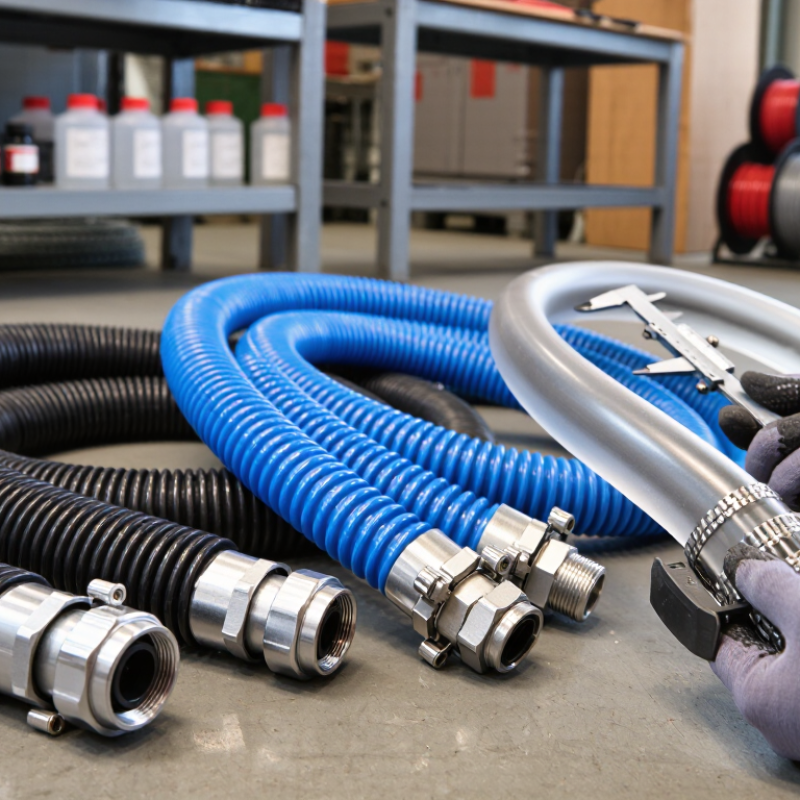
A corrugated suction hose is a flexible tube designed to move liquids, slurries, air, or loose materials under suction. Its ribbed outer wall improves flexibility while supporting the hose against collapse. The inner surface usually remains smooth enough to reduce flow resistance. Some designs include reinforced spirals or rigid support layers. These features matter when pumps create negative pressure.
The best hose depends on the working conditions, not appearance alone. Check the working pressure, vacuum rating, temperature range, and chemical compatibility. A hose moving muddy water needs different protection than one handling light industrial fluids. Heavy walls resist abrasion, but they can increase weight and reduce handling comfort. I have found that bend radius is often overlooked during installation. A hose may perform well in testing, yet fail early when forced into a sharp corner. That is worth rechecking.
Tips: Measure the connection size carefully. Keep bends gradual. Inspect the ribs for cracks, soft spots, and exposed reinforcement before use. Tight clamps help, but excessive force can damage the hose. Store it away from direct sunlight and sharp edges. If the hose flattens during operation, stop and investigate the vacuum level, blockage, or routing. Small installation mistakes can become costly.
A corrugated suction hose is a flexible hose with a ribbed outer wall designed to transfer air, liquids, powders, or granular materials under suction or low-pressure conditions. The best choice depends on temperature resistance, flexibility, chemical compatibility, abrasion resistance, and the required vacuum level.
The chart shows common representative working-temperature ranges for materials used in corrugated suction hoses. PVC is economical and suitable for general-purpose conveying, TPU offers stronger abrasion resistance, EPDM performs well with heat and weather exposure, and silicone supports the widest temperature range. Actual limits vary with hose construction, reinforcement, media, pressure, and service conditions; always verify the technical datasheet before selection.
The best corrugated suction hose depends on the material, service fluid, pressure, and working temperature. Its structure usually combines a flexible tube, corrugated walls, and a reinforcing helix. Polyvinyl chloride, or PVC, is common because it is lightweight, economical, and resistant to many mild chemicals. Clear PVC also helps operators observe liquid movement and detect blockages.
Polyurethane offers stronger abrasion resistance. It suits applications involving sand, grains, powders, or other rough materials. However, flexibility can change in cold conditions. Rubber provides excellent resilience and handles repeated bending well. It often performs reliably in demanding transfer work, but its heavier weight may increase handling effort.
The helix deserves close attention. Steel reinforcement improves vacuum resistance and helps prevent hose collapse. Plastic spirals reduce weight and may resist corrosion better. Still, neither option fits every system. A hose can look durable yet fail when its material clashes with the transferred fluid. I once saw a flexible hose crack near a coupling after frequent bending. The tube was suitable, but the connection area lacked proper support.
Temperature ratings also matter. Heat can soften some thermoplastics, while cold can reduce flexibility. Check chemical charts, wall thickness, bend radius, and pressure limits before installation. Do not rely only on appearance. In practice, the most reliable choice balances material compatibility, reinforcement, and daily handling conditions.
What Is the Best Corrugated Suction Hose?
The best corrugated suction hose balances strength, flexibility, and service life. A thick wall alone does not guarantee reliable performance. Check the hose’s vacuum rating, reinforcement, and fitting quality. A strong hose should resist collapse when pumps create negative pressure. Its wire helix should remain firmly embedded during repeated bending. Examine the coupling area carefully. That is often where failures begin.
Flexibility matters around tanks, pumps, and tight work areas. Measure the minimum bend radius before installation. A hose that bends too sharply may kink or flatten. In cold conditions, plastic compounds can become less forgiving. Leave enough length for movement, but avoid loose loops on the ground. Shorter is not always better. I once assumed a stiffer hose would last longer. That judgment was incomplete. Excessive stiffness can transfer stress directly to fittings.
Durability depends on the working environment. Look for resistance to abrasion, sunlight, oils, moisture, and expected temperatures. Dragging a hose across rough concrete can damage its outer ribs quickly. Fine cracks deserve attention, even when suction still feels normal. Inspect the hose before each demanding job. Check for crushed sections, exposed reinforcement, and loose couplings. Keep records of operating hours and visible wear. This makes replacement decisions more reliable. A practical comparison should match the hose to its actual workload, not just its advertised thickness.
| Comparison Factor | Light-Duty PVC Corrugated Hose | Medium-Duty PVC Suction Hose | Polyurethane Suction Hose | Rubber Suction Hose |
|---|---|---|---|---|
| Typical construction | Flexible PVC wall with a reinforcing helix | Thicker PVC wall with a rigid spiral reinforcement | Abrasion-resistant polyurethane wall with embedded reinforcement | Flexible synthetic-rubber wall with textile or wire reinforcement |
| Common inside diameter range | 25–100 mm (1–4 in) | 38–150 mm (1.5–6 in) | 38–300 mm (1.5–12 in) | 25–300 mm (1–12 in) |
| Typical working pressure at 20°C | Approximately 1.5–3 bar (22–44 psi) | Approximately 2–5 bar (29–73 psi) | Approximately 2–6 bar (29–87 psi) | Approximately 4–10 bar (58–145 psi) |
| Typical vacuum rating | Approximately 0.3–0.6 bar vacuum | Approximately 0.6–0.9 bar vacuum | Approximately 0.6–0.9 bar vacuum | Approximately 0.8–1.0 bar vacuum |
| Typical temperature range | Approximately −10°C to +60°C | Approximately −15°C to +60°C | Approximately −40°C to +90°C | Approximately −40°C to +100°C |
| Flexibility | Very high; easy to route around equipment | High; balances flexibility and crush resistance | High; remains flexible at low temperatures | Moderate to high; heavier and less easy to handle |
| Minimum bend radius | Typically 3–5 × hose inside diameter | Typically 4–6 × hose inside diameter | Typically 3–5 × hose inside diameter | Typically 4–8 × hose inside diameter |
| Abrasion resistance | Low to moderate; suited to light solids | Moderate; suitable for water, sludge, and limited solids | Very high; well suited to abrasive powders and granules | High; suitable for demanding wet and dry service |
| Crush resistance | Low; avoid vehicle traffic and sharp kinks | Moderate to high | High when properly reinforced | Very high with textile or wire reinforcement |
| Chemical resistance | Good resistance to water and many mild chemicals; check compatibility | Good resistance to water, dilute acids, and alkalis; verify chemical data | Good resistance to oils and many chemicals; not universal | Good resistance to oils and water; compound-specific |
| Approximate relative weight | Light | Medium | Light to medium | Heavy |
| Best suited applications | Garden irrigation, light water transfer, and ventilation | Pumps, drainage, wastewater, and general material transfer | Dust collection, grain, pellets, powders, and abrasive materials | Mining, construction, dredging, slurry, and heavy-duty transfer |
| Overall selection priority | Best for low cost and maximum flexibility | Best general-purpose balance | Best for abrasion resistance with low weight | Best for high pressure, vacuum, and severe service |
Note: The values shown are typical ranges for comparable hose constructions. Actual pressure, vacuum, temperature, bend-radius, and chemical-resistance ratings depend on hose diameter, reinforcement, fittings, operating temperature, and manufacturer testing. Always verify the technical datasheet before selection.
What Is the Best Corrugated Suction Hose?
Selecting the best corrugated suction hose depends on the application, not appearance. Start with the material being transferred. Water, mild chemicals, oils, powders, and abrasive slurries can require different hose constructions. Check chemical compatibility at the expected temperature. A hose that handles cold water may soften or crack when exposed to heat.
Measure the required inner diameter carefully. A narrow hose can restrict flow and increase pump strain. Confirm the working pressure, vacuum rating, and maximum temperature before installation. Corrugation improves flexibility, but it can also create pockets where residue collects. For food, sanitary, or clean-process applications, choose a smooth interior when cleaning matters more than flexibility. In abrasive service, consider reinforced walls and abrasion-resistant materials. Static control may also be important when transferring dry powders or flammable fluids. Follow applicable safety standards.
Tips: Keep the bend radius generous. Do not force a hose around sharp corners. Inspect the cover for cuts, crushed corrugations, or exposed reinforcement. Check couplings and clamps as well. A thicker hose is not automatically better; it may be heavier and harder to handle. I have seen selection decisions focus on durability while ignoring lifting effort and storage space. That is an easy mistake. Match the hose to the pump, flow rate, temperature, environment, and cleaning routine. Leave room for real working conditions.
What Is the Best Corrugated Suction Hose?
Maintenance, Safety, and Service Life Considerations
The best corrugated suction hose is not simply the thickest option. It must match the fluid, vacuum level, temperature, and bend radius. Check the corrugations before every shift. Look for crushed ribs, deep cuts, exposed reinforcement, and softened sections. Look inside, too. Foreign particles can restrict flow and create unexpected vacuum stress.
Safety failures often begin with rushed preparation. Isolate the pump, release pressure, and support the hose before loosening any connection. Never drag a loaded hose across sharp concrete. Secure both ends against movement, especially during pump startup. The U.S. Bureau of Labor Statistics reported 2.6 million nonfatal workplace injuries in private industry during 2023. Hose handling is only one exposure, but small controls still matter. Do not guess.
Service life depends on conditions, not a convenient calendar date. Continuous flexing, sunlight, chemical contact, and high vacuum can shorten it sharply. The Health and Safety Executive reported 1.7 million workers with work-related ill health in Great Britain during 2023/24. That broad figure does not measure hose failures, yet it reinforces the cost of weak maintenance habits. Record installation dates, operating temperatures, cleaning chemicals, and inspection findings. Replace a hose after visible damage, permanent deformation, or repeated collapse. A hose can look acceptable outside while its inner wall is already weakened. Our inspection routines may be too optimistic. Review them honestly.