Choosing the right freeze dryer can shape your production costs, product quality, and future growth. When you Buy Freeze Dryer equipment, the lowest price should not guide the decision alone. A small bakery, supplement company, or prepared-food producer may need very different specifications. Daily batch size matters. So does product moisture, packaging style, and available floor space.
Start by examining the complete operating picture. A unit with a 10-kilogram capacity may suit early production, but it could become a bottleneck after one successful contract. Check shelf dimensions, condenser temperature, vacuum performance, drying time, and electrical requirements. Ask how the machine performs with fruit, dairy, meat, or ready-to-eat meals. These products release moisture differently. They also require careful handling and documented sanitation procedures.
Reliable suppliers should provide test data, maintenance schedules, warranty terms, and operator training. Request a product demonstration using materials similar to your own. Watch the chamber temperature, listen for unusual pump noise, and inspect the final texture. Small details reveal a lot. Service response time is equally important. A machine that sits idle for three days can erase a week’s margin.
No checklist is perfect. Real production often exposes assumptions that brochures hide. You may underestimate cleaning time, packaging labor, or power consumption. Therefore, compare total ownership costs instead of comparing purchase prices alone. This guide explains how to assess capacity, technology, safety, supplier support, and return on investment. The goal is a practical decision, not an impressive machine sitting unused.
Before buying a freeze dryer, define what your business must produce. Product goals shape every equipment decision. Consider batch size, drying time, moisture targets, texture, and expected shelf life. A small operation may need flexible loading, while a growing facility may require repeatable daily output. Write down your current production volume and your three-year estimate. My experience shows that estimates are often too optimistic.
Product requirements need practical testing. Soft fruit, cooked meals, herbs, and dairy-based products behave differently during freezing and drying. Record piece thickness, starting weight, final weight, and drying time for each trial. Check texture after rehydration, not only appearance. Packaging also matters because oxygen and humidity can quickly reduce quality. Keep clear production records, cleaning procedures, and batch checks. These habits support safer, more consistent operations.
Tips: Test your hardest product first. Measure energy use. Leave room for growth. Ask whether staff can load, clean, and monitor the machine without confusion. A complicated system may look efficient but create costly mistakes during busy shifts. Review temperature control, vacuum performance, service access, and replacement-part availability. Do not choose capacity from marketing claims alone. Compare results from real samples. Your first test may reveal that the product needs thinner cuts, longer freezing, or different packaging. That is useful information, not failure.
Buying a freeze dryer starts with the product, not the machine’s advertised size. A manifold unit suits small batches, laboratory samples, and irregular containers. Shelf-type systems provide controlled loading and repeatable drying across trays. Pilot models help validate recipes before production. Industrial systems offer higher throughput, but they demand stronger utilities, trained operators, and more floor space.
Capacity needs careful interpretation. Ask for usable shelf area, maximum ice-load capacity, and batch weight under your recipe. A 50-liter chamber may not process 50 liters of product. Product thickness, sugar content, and container spacing change the cycle considerably. The 2024 Fortune Business Insights report estimates the global freeze-drying equipment market at about USD 2.6 billion in 2023, reflecting wider commercial adoption. That growth does not make every large system economical.
Core features deserve a written comparison. Check condenser temperature, vacuum stability, shelf-temperature range, data logging, alarm history, defrost method, and cleaning access. Confirm electrical load and cooling-water requirements before ordering. Grand View Research projects strong market growth through 2030, with an estimated compound annual growth rate above 8 percent. Still, market growth is not proof of a fast payback. I would request a witnessed trial using the actual product, packaging, and target moisture level. A cheap cycle can be expensive. One overlooked issue is operator training; even advanced controls cannot repair poor loading or incomplete records.
Buying a freeze dryer requires more than comparing purchase prices. Estimate the full cost over three to five years. Include the machine, shipping, taxes, installation, electrical work, vacuum equipment, and room preparation. A unit may need reinforced flooring, ventilation, or upgraded power. These details can change the budget quickly.
Operation costs include electricity, water, refrigeration, labor, packaging, and batch preparation. Record the expected batch time and product load before calculating output. For example, a longer cycle may increase labor costs even when energy use seems moderate. Maintenance also needs a separate allowance. Include vacuum-pump oil, filters, seals, sensors, cleaning supplies, inspections, and unexpected repairs. Downtime has a cost too. A missed production day can affect orders, staffing, and customer trust. I have seen early budgets overlook training and spare parts, creating avoidable pressure after installation. That mistake is worth questioning.
Tips: Build a simple cost sheet with four sections: purchase, installation, operation, and maintenance. Ask the supplier for utility requirements, service intervals, replacement-part prices, and realistic cycle data. Add a contingency reserve of 10–15 percent, but adjust it for older facilities or uncertain electrical work. Test your assumptions with a small production trial. Real results may differ from the sales estimate. Keep invoices, energy readings, repair notes, and batch records. These records make future purchasing decisions more reliable.
A freeze dryer is a long-term production decision, not a simple equipment purchase. Grand View Research’s 2024 analysis projects continued growth in the global lyophilization equipment market. That growth can attract inexperienced suppliers. Review their installation history, service network, and documented performance in similar applications. Ask for cycle data, vacuum stability records, and references from businesses with comparable batch sizes. A polished demonstration may hide practical limitations.
Warranty coverage deserves careful reading. Check whether it includes the vacuum pump, refrigeration system, sensors, software, and replacement labor. Response times should be written, not verbally promised. ISPE’s guidance on lyophilization emphasizes process control, validation, and reliable equipment performance. Therefore, technical support should include troubleshooting procedures, remote diagnostics, and qualified field engineers. Training must cover loading patterns, shelf-temperature control, condenser defrosting, alarms, and cleaning routines. One afternoon of training is rarely enough.
Tips:
Request a support matrix before signing. It should show contact hours, emergency response targets, spare-parts availability, and escalation steps. Ask for recorded training materials and operator assessments. Also, calculate downtime costs before comparing prices. The cheapest quote may become expensive after one failed batch. A common mistake is trusting a long warranty with narrow exclusions. Read every clause. Then ask the supplier to explain it plainly. My own judgment would remain cautious: technical support claims are difficult to verify until equipment fails. A trial installation or factory acceptance test can expose weaknesses earlier.
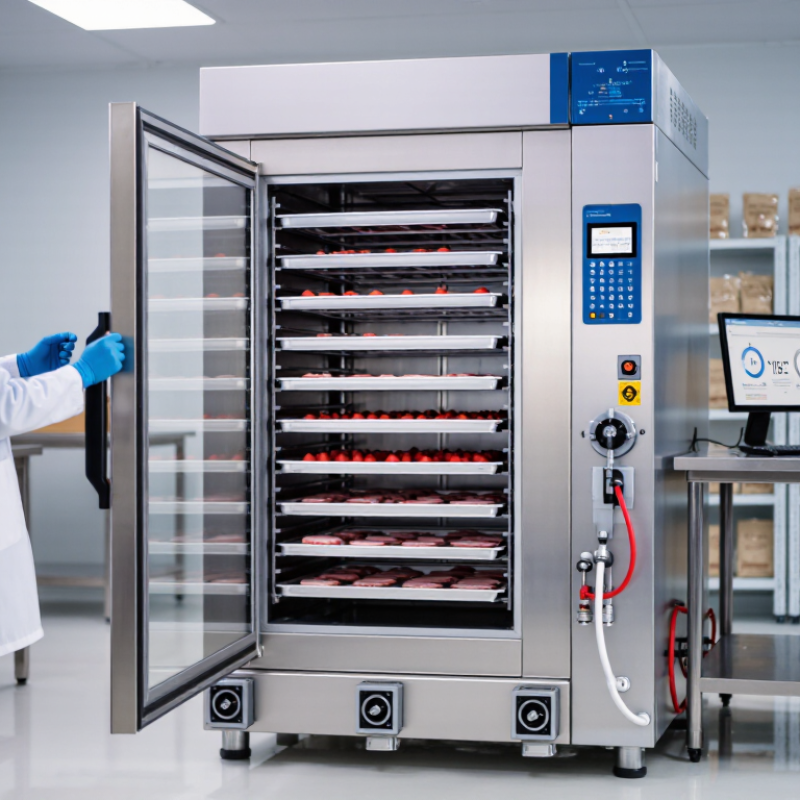
Buying a freeze dryer starts with inspection, not a glossy sales demonstration. Define your batch size, product moisture, cycle frequency, and available power. A chamber that fits today’s production may become restrictive within a year. Measure door clearance, floor strength, ventilation, drainage, and heat rejection before requesting quotations. Ask for documented cycle data, vacuum performance, condenser temperature, shelf uniformity, and final moisture results.
Inspect the condenser, shelves, door seal, vacuum pump, valves, sensors, and control cabinet. Look for oil leaks, cracked gaskets, corrosion, brittle wiring, and uneven shelf surfaces. Request maintenance records and laboratory calibration certificates.
The U.S. Food and Drug Administration’s Food Code 2022 requires temperature controls that support safe food handling, including cold holding at 41°F (5°C) or below. Your process still needs product-specific validation. Do not assume a low pressure reading proves a reliable cycle.
Safety deserves a written review. OSHA’s Control of Hazardous Energy guidance estimates that effective lockout/tagout can prevent about 120 fatalities and 50,000 injuries annually. Confirm emergency stops, electrical isolation, pressure protection, refrigerant servicing procedures, and operator training.
Freeze drying is also energy intensive; research published in Drying Technology identifies it as substantially more energy demanding than conventional drying. Compare pump capacity, defrost time, cycle length, and standby consumption. My first capacity estimate may be wrong. Run a pilot with your actual product, record every interruption, and price spare parts before signing.