
China’s capacitor manufacturing sector includes large electrical groups, specialized power-quality companies, and focused export suppliers. This guide explores the China Top 10 Capacitor Bank Manufacturers? It considers their technical capabilities, product range, manufacturing experience, and service reliability.
A practical comparison looks beyond impressive brochures. It reviews automatic capacitor banks, harmonic-filtered systems, outdoor enclosures, switching methods, and reactive power ratings. Factory testing also matters. Temperature-rise checks, insulation tests, and controller verification can reveal more than marketing language. Documentation should clearly identify voltage, frequency, kvar capacity, protection functions, and installation conditions.
Details matter.
The selected manufacturers are assessed through public product information, technical documents, project references, and available customer-service evidence. Where possible, attention is given to compliance with relevant IEC or Chinese standards. Export experience, customization ability, spare-parts access, and response time are also important for overseas buyers. A supplier may offer competitive pricing but lack local commissioning support. Another may provide strong engineering but longer delivery periods.
No ranking is permanent. Public data can be incomplete, and manufacturer claims require careful verification. Buyers should request test reports, drawings, warranty terms, and recent project references before making a decision. Site conditions may also change the best choice; a factory with heavy harmonics needs different protection from a small commercial building. This article aims to provide a reliable starting point, not a substitute for technical review. The right Capacitor Bank manufacturer should match the application, grid conditions, budget, and long-term maintenance expectations.
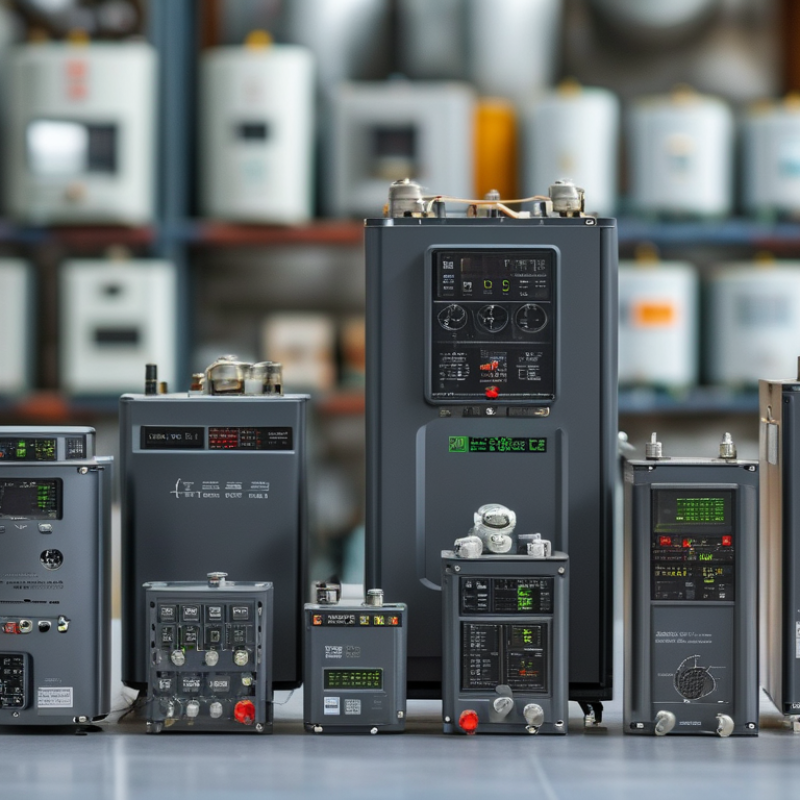
A capacitor bank is a group of capacitors connected to an electrical system. It supplies reactive power near inductive loads, such as motors, transformers, and welding equipment. This support improves power factor and reduces unnecessary current in cables. Lower current can also reduce copper losses and voltage drop.
They are not batteries.
Capacitor banks store and release electrical energy within each AC cycle. Fixed banks suit steady loads, while automatic banks switch stages as demand changes. Controllers, contactors, fuses, discharge resistors, and protective relays support safe operation. In practical installations, engineers check harmonics before adding capacitance. Harmonic currents may cause overheating or resonance, especially where variable-speed drives operate. Heat matters. Poor ventilation can shorten capacitor life.
When comparing capacitor bank manufacturers in China, buyers should examine test records, component traceability, enclosure quality, and compliance with relevant IEC requirements. Factory inspection experience shows that small details often matter: tightened terminals, clear wiring labels, and accurate temperature ratings. Field engineers should also review switching frequency, ambient temperature, maintenance access, and warranty procedures. A low purchase price may hide higher losses or frequent replacement costs. Still, specifications alone cannot predict every site condition. Load patterns change, measurements can be incomplete, and an apparently suitable design may need adjustment after commissioning. Reliable suppliers should provide calculation support, documented tests, and practical guidance rather than promising universal performance.
China Top 10 Capacitor Bank Manufacturers?
Selecting a Chinese capacitor bank manufacturer requires more than comparing price lists. The IEA Electricity 2024 report projects global electricity demand growth of about 4% annually through 2026. This growth increases pressure on power quality, reactive-power control, and equipment reliability.
Check whether each manufacturer tests capacitance tolerance, dielectric loss, temperature rise, switching performance, and discharge safety under IEC 60871 or IEC 61921 requirements. Ask for recent factory test records, not only certificates. A credible supplier should explain harmonic-resonance risks using measured site data. Look for automatic detuning functions, enclosure protection, busbar sizing, and capacitor fuse coordination. Small details matter. A loose terminal can create heat marks within weeks.
Manufacturing consistency also deserves close review. Request traceability for capacitor elements, reactors, controllers, and insulating materials. Review factory audits, calibration records, aging tests, and failure statistics from comparable installations. ISO 9001 certification supports process control, but it does not prove field performance. That distinction is often missed.
Service capability is equally important. Evaluate commissioning support, response times, spare-part availability, and remote diagnostics. Ask for references in factories, solar plants, or utility substations with similar harmonic conditions. Published efficiency figures may look convincing, yet actual losses can change with temperature and loading. No checklist catches every risk. Independent inspection before shipment remains worthwhile.
| No. | Evaluation Dimension | What to Verify | Objective Benchmark or Evidence | Suggested Weight |
|---|---|---|---|---|
| 1 | Applicable Standards | Confirm that the capacitor bank design, testing, and documentation match the intended low-voltage or medium-voltage application. | Relevant compliance with IEC 61921 for power capacitor banks and IEC 60831-1/-2 for self-healing shunt capacitors, where applicable. | 15% |
| 2 | Reactive Power Capacity | Evaluate rated voltage, frequency, kvar capacity, number of stages, and the required correction target. | The proposed kvar rating should be calculated from the load profile and target power factor rather than selected only from a standard package size. | 12% |
| 3 | Harmonic Compatibility | Check whether the bank is suitable for systems containing variable-frequency drives, rectifiers, UPS equipment, or other nonlinear loads. | Require a harmonic study when significant distortion is present; detuned reactors are commonly specified to reduce resonance risk. | 15% |
| 4 | Safety and Protection | Review discharge resistors, overcurrent protection, overvoltage protection, temperature monitoring, switching protection, and isolation provisions. | The design should include a documented protection scheme and a discharge method appropriate to the equipment rating and applicable standard. | 14% |
| 5 | Component Traceability | Verify traceable records for capacitors, contactors or thyristor switches, reactors, fuses, controllers, busbars, and enclosures. | Serial numbers, incoming inspection records, batch records, certificates, and a documented bill of materials should be available. | 10% |
| 6 | Factory Quality Control | Assess incoming inspection, assembly controls, electrical testing, calibration management, nonconformance handling, and final inspection. | A valid ISO 9001 quality-management certificate and recent internal or third-party audit records provide measurable evidence of process control. | 10% |
| 7 | Testing Capability | Confirm the availability of routine tests, functional tests, insulation checks, wiring verification, and temperature or endurance testing where required. | Test instruments should have current calibration certificates traceable to recognized national or international standards. | 10% |
| 8 | Enclosure and Environmental Design | Review enclosure material, ventilation, creepage and clearance, corrosion protection, cable entry, installation location, and service access. | The specified IP rating should match the installation environment; IEC 60529 is the reference standard for IP classification. | 8% |
| 9 | Customization and Engineering Support | Evaluate the ability to provide single-line diagrams, GA drawings, control logic, communication interfaces, special voltages, and project-specific documentation. | A complete technical submittal should include drawings, datasheets, protection settings, installation instructions, and operation and maintenance documents. | 4% |
| 10 | Delivery and After-Sales Service | Assess production planning, packaging, spare-parts support, warranty terms, commissioning assistance, troubleshooting response, and training. | Use a written schedule, inspection plan, warranty statement, spare-parts list, and defined response times as part of the purchasing evaluation. | 2% |
Note: The weighting is an evaluation framework rather than a ranking of individual companies. Final selection should be based on the project voltage, load profile, harmonic environment, installation conditions, and applicable local regulations.
China’s top 10 capacitor bank manufacturers should be judged by market strength, not factory size alone. Key indicators include installed capacity, export coverage, utility references, certification, and after-sales service. Fortune Business Insights estimates the global power capacitor market will grow steadily through 2032, driven by grid upgrades and industrial electrification. China remains important because of its large power network, dense manufacturing base, and strong export activity.
The strongest ten suppliers usually serve substations, renewable-energy plants, data centers, and large factories. Their products commonly include automatic capacitor banks, harmonic-filtered systems, and medium-voltage assemblies.
Market research from Mordor Intelligence also identifies Asia-Pacific as a major growth region for power-quality equipment. However, rankings can change quickly. Public revenue data is incomplete, and some suppliers report group sales rather than capacitor-bank sales. That weakens direct comparison.
Tips: Check operating temperature, switching frequency, harmonic conditions, and discharge safety before comparing prices. Ask for recent project references and test records. A lower quotation may hide weaker controllers or shorter warranty support. In practice, local service response can matter more than a small efficiency difference. This is easy to underestimate. A useful ranking should combine measurable data with field experience, while admitting that no public list is perfectly complete.
China’s leading capacitor bank manufacturers now serve low-voltage, medium-voltage, and high-voltage applications. Common products include fixed capacitor banks, automatic power factor correction panels, detuned filter banks, and harmonic filtering systems. IEC 61921 defines capacitor bank requirements for power factor correction, while IEC 60871 covers high-voltage shunt capacitors.
Applications vary by operating environment. Factories use automatic banks to reduce reactive power penalties and stabilize motor loads. Solar and wind installations require dynamic compensation because output changes quickly. Data centers often need fast switching, low harmonic distortion, and clear thermal monitoring. The IEA Electricity 2024 report expects global electricity demand to grow by about 4% annually through 2026. That growth increases pressure on distribution networks and makes reactive power control more important.
Technical capability should be judged beyond rated capacity. Strong suppliers provide detuned reactors, thyristor switching, capacitor protection, discharge resistors, and remote monitoring. Typical systems support voltage classes from 400 V to several kilovolts, but project conditions decide the correct design. The CIGRE technical literature repeatedly warns that harmonics can shorten capacitor life. A larger bank is not automatically better. Engineers must check load profiles, resonance risk, enclosure cooling, and maintenance access. One weakness in many comparisons is limited field data. Laboratory ratings may not reflect dust, heat, or frequent switching. Supplier audits and site testing remain necessary.
Selecting a capacitor bank manufacturer in China requires more than comparing quotations. Start with the application sheet: rated voltage, kvar output, switching steps, frequency, enclosure rating, ambient temperature, and expected harmonics. The IEA’s Electricity 2024 report expects global electricity demand to rise about 4% annually through 2026. That growth makes power quality and thermal margins less forgiving. Ask for calculations showing expected power-factor improvement, inrush control, and detuned reactor sizing. A supplier avoiding these details may be selling a cabinet, not an engineered system.
Require compliance with IEC 61921, IEC 60831-1, and applicable local grid rules. Request routine-test records, capacitor loss data, reactor temperature-rise results, wiring diagrams, and a factory acceptance test. IRENA reported that 473 GW of renewable capacity was added worldwide in 2023. More converters can mean greater harmonic stress, so demand a measured harmonic study instead of generic filter claims. Inspect busbar joints, ventilation paths, controller settings, and spare-part availability. Small details matter.
Audit the factory or use an independent inspector. Check traceability from raw capacitor elements to final serial numbers. Ask who will troubleshoot after commissioning and how quickly replacement parts ship. Compare warranty exclusions carefully; “five years” can hide limits on switching cycles or ambient conditions. I once treated a low price as efficiency. It became rework. That mistake still shapes my checklist. A strong manufacturer shares test evidence, admits design limits, and adjusts the bank to the site, not merely to a catalogue.
The chart presents a practical procurement benchmark for comparing capacitor bank manufacturers. Compliance with IEC standards, electrical performance, safety, environmental suitability, engineering customization, after-sales support, and delivery capability are commonly assessed before supplier qualification. The percentages represent evaluation priorities and total 100%.