How to Choose the Best 3D Printing Supplier in China?
Choosing the best 3d Printing supplier in China requires more than comparing prices. A factory may offer fast quotations, modern machines, and impressive product photos. Yet these details do not prove consistent production quality. A reliable decision begins with evidence.
Dr. Hod Lipson, a respected additive manufacturing researcher, once said, “3D printing is going to change the world.” His statement reflects the technology’s potential, but potential alone cannot protect your project. You need a supplier that understands design constraints, material behavior, dimensional tolerances, and post-processing requirements. Ask for recent inspection reports, machine specifications, material certificates, and physical samples. A test part can reveal visible layer lines, weak corners, poor support removal, or inaccurate holes within minutes.
Look beyond the first quotation. Compare lead times, minimum order quantities, communication speed, and quality-control procedures. Clarify whether the supplier manages printing, sanding, painting, assembly, and packaging internally. Visit the facility when possible, or request a live video inspection. Ask how rejected parts are recorded and corrected. Weak answers matter.
My own evaluation would not rely on a polished website. That is an easy mistake. A supplier’s real capability appears during a difficult conversation about tolerances, failed prints, and delivery risks. Some factories may promise everything, but few explain their limits clearly. The right partner should provide practical recommendations, transparent pricing, and traceable production records. This guide examines those signals, helping buyers choose a China-based 3d Printing supplier with stronger confidence and fewer costly surprises.
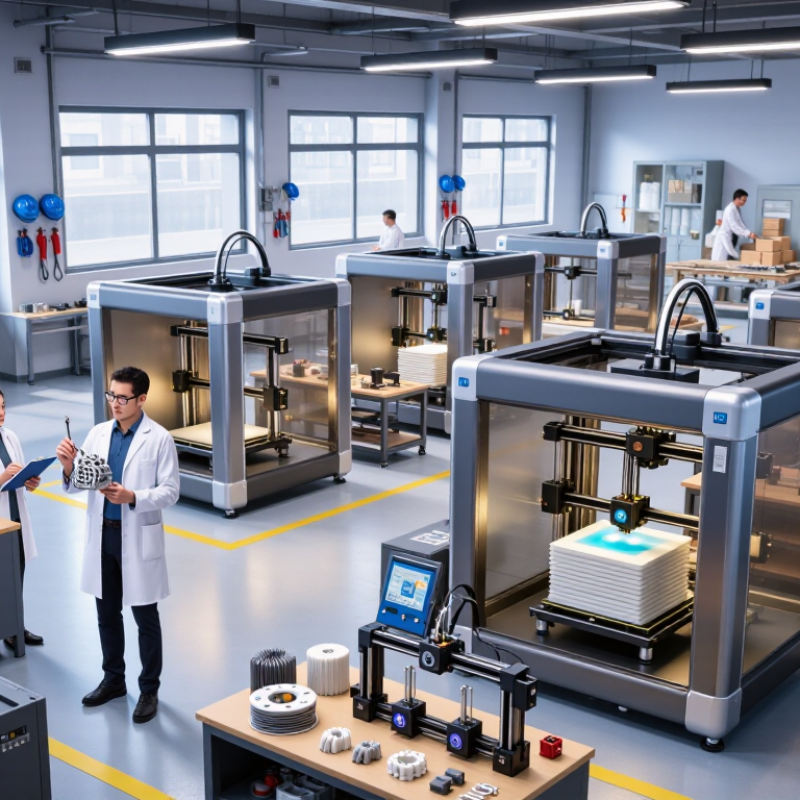
Define Your 3D Printing Requirements and Project Specifications
Before comparing Chinese 3D printing suppliers, define the part, process, and business target. The Wohlers Report 2024 valued the global additive manufacturing industry at $20.035 billion in 2023, with 13.5% growth. That scale creates options, but also confusion. State the material, printing technology, dimensions, quantity, surface finish, tolerance, and expected service life. Include a marked drawing. A CAD file alone is not enough.
Specify whether the prototype needs visual quality or functional performance. For production parts, list load conditions, temperature exposure, inspection points, and acceptable defects. Ask suppliers to confirm their layer thickness, build volume, post-processing methods, and measurement equipment. ISO/ASTM 52900 terminology can reduce misunderstandings. Also request sample reports, process records, and a clear quotation separating tooling, finishing, packaging, and shipping. Small costs can grow quietly.
A practical specification should include delivery milestones and approval stages. For example, require one sample, dimensional inspection, and written approval before batch production. The supplier should explain how rejected parts are handled. This detail matters more than a very low unit price. In practice, even experienced buyers sometimes overlook color consistency or support marks. I have seen neat drawings hide unclear tolerances. That is a warning. Leave room for design revision, because the first printed part may reveal warping, weak edges, or difficult assembly. A capable supplier will question unrealistic requirements instead of accepting every number without discussion.
Assess Supplier Expertise, Technologies, and Material Capabilities
Choosing a 3D printing supplier in China requires more than comparing hourly rates. Assess engineering expertise, machine capability, and material control together. The Wohlers Report 2024 valued the global additive manufacturing industry at about $20 billion in 2023, showing how quickly supplier standards are evolving.
Ask whether the supplier can review wall thickness, support structures, tolerances, and assembly risks before production. A capable team should explain when to use SLA, SLS, FDM, or metal powder bed fusion. Ask for process records, calibration dates, inspection reports, and traceability documents. Ask for evidence. ISO/ASTM 52900 terminology can also help you compare technical claims consistently.
Material capability needs practical testing. Request samples made from the same resin, polymer, or alloy planned for your parts. Check surface finish, dimensional stability, heat resistance, and post-processing results. Material data sheets alone are not enough. The supplier should identify powder reuse limits, moisture controls, curing conditions, and finishing tolerances. ASTM’s additive manufacturing standards emphasize process consistency and qualification, not just printer specifications. A factory tour or live video audit can reveal storage problems, untrained operators, or crowded production areas. This is where many evaluations become too optimistic. Even experienced buyers can overlook changing material batches or hidden manual work. Begin with a small pilot order, measure actual results, and question every unexplained variation before approving larger volumes.
Compare Pricing, Lead Times, Communication, and Shipping Options
How to Choose the Best 3D Printing Supplier in China?
Price is important, but the lowest quote may hide setup fees, material limits, or weak quality control. Ask for a detailed quotation covering printing, finishing, packaging, and tooling. Compare identical specifications, not general price ranges. A reliable supplier should explain tolerances, layer settings, and inspection methods clearly. Request a sample before approving a large order. Small samples reveal surface marks, warping, and color differences early.
Lead time needs careful checking. Confirm the production schedule, sample approval date, and dispatch date in writing. Ask what happens if the design changes. Communication matters here. A responsive engineer can flag thin walls or difficult angles before production begins. Time-zone gaps can still create delays. Use clear drawings, numbered files, and one shared revision list. I once underestimated approval time, and the shipment missed a planned product test. That mistake was avoidable.
Tips: Compare at least three written quotes. Check whether shipping includes customs documents and insurance. Choose air freight for urgent, lighter packages, and sea freight for larger shipments. Ask for carton dimensions and estimated duties before payment. Do not rely only on promised speed. A practical supplier will discuss risks, not simply agree with every request. Keep a small time buffer, even when the schedule looks perfect.
Evaluate Samples, Contracts, Support, and Long-Term Reliability
How to Choose the Best 3D Printing Supplier in China
A reliable supplier should provide physical samples before accepting a large order. Examine surface finish, dimensional accuracy, wall strength, and fine details. Ask how each sample was produced and whether the same process will be used for production. Measure critical areas with calipers, not only by visual inspection. A sample may look excellent, yet hide weak internal structures.
Tips: Request two or three samples from different production runs. Record measurements, material type, print settings, and visible defects. Add these details to the contract. The agreement should define tolerances, approved materials, inspection methods, delivery dates, payment stages, and remedies for defective parts. Protecting design files also matters. A low price can still become expensive.
Support after the sale reveals long-term reliability. Test response times with practical questions before ordering. Ask who handles technical changes, failed prints, urgent replacements, and quality reports. Suppliers with clear procedures usually communicate better during pressure. Check references, production capacity, equipment maintenance, and worker inspection steps where possible. A small pilot order is safer than trusting promises. No checklist is perfect. I would still review the first shipment carefully, because small inconsistencies can grow across thousands of parts.
How to Choose the Best 3D Printing Supplier in China
Suggested evaluation weights for samples, contracts, support, and long-term reliability
Use these percentage weights as a practical supplier-selection framework. Evaluate sample quality first, then confirm contract clarity, technical support, consistent quality, and reliable delivery performance before making a long-term commitment.