How to Choose the Best Waterproof LED Tube from China?
Choosing the right Waterproof Led Tube from China requires more than comparing prices and wattage. It requires evidence.
The International Energy Agency identifies lighting efficiency as a major opportunity for reducing electricity demand. Its energy-efficiency analysis also highlights the continuing shift toward LED technology. Meanwhile, the U.S. Department of Energy’s Solid-State Lighting research reports that LED performance depends on thermal management, optics, drivers, and long-term reliability. These points matter in wet factories, parking areas, food-processing rooms, and outdoor walkways.
Look beyond bright product photographs.
A dependable Waterproof Led Tube should have a clearly stated IP rating, tested under IEC 60529 methods. IP65 may resist dust and water jets, while IP67 offers temporary immersion protection. These ratings are not interchangeable. Confirm the test report, not only the printed label. Check housing material, silicone seals, end-cap design, cable glands, operating temperature, and driver quality. A tube may survive rain but fail beside a hot machine. That detail is easy to miss.
Reports from organizations such as ENERGY STAR and the DesignLights Consortium also show why verified efficiency, lumen maintenance, and product documentation deserve attention. However, certification coverage varies by product type and market. No checklist is perfect.
China offers extensive manufacturing capacity, customization, and competitive supply chains. Yet supplier selection still needs practical verification. Request samples, photometric files, safety certificates, warranty terms, and batch inspection records. Test the tube in a damp, dusty location before placing a large order. A lower initial price can become expensive after early failures, difficult replacements, or inconsistent color output. This guide explains the evidence, questions, and technical details buyers should examine before choosing a Waterproof Led Tube from China.
Define Waterproof LED Tube Types and Protection Ratings
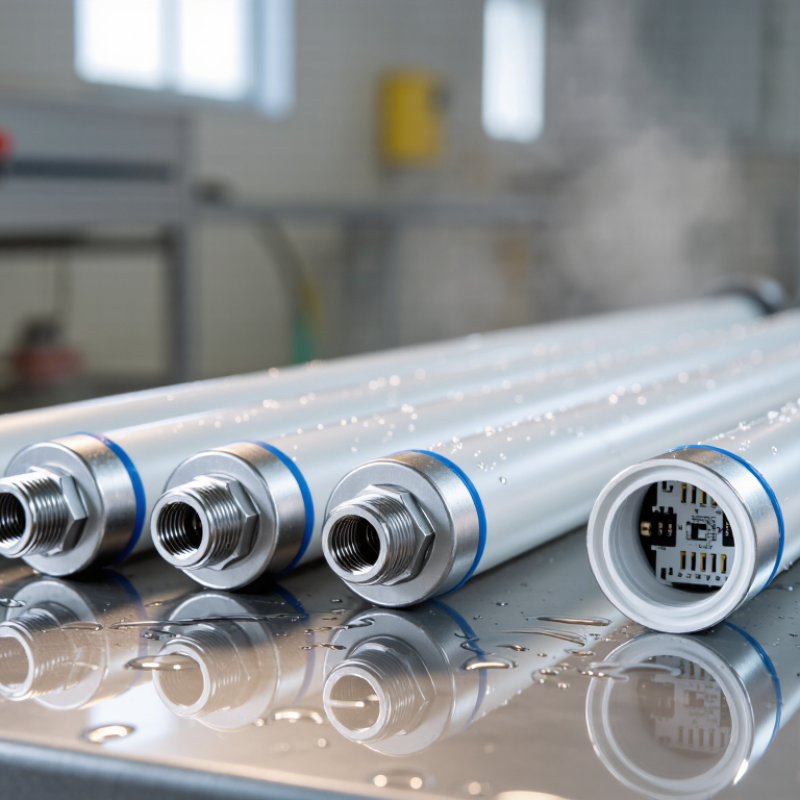
When choosing a waterproof LED tube from China, define the product type before comparing prices. A bare LED tube with end caps may fit an existing fixture, but it usually needs a sealed housing. A vapor-tight linear fixture includes the tube, diffuser, gasket, and mounting clips. It suits parking garages, food-processing areas, workshops, and outdoor walkways. Silicone-sleeved tubes offer extra moisture protection, yet their sleeves can trap heat if ventilation is poor.
The IP rating explains protection against solids and water. IP65 blocks dust and resists water jets. IP66 adds stronger water-jet protection. IP67 allows temporary immersion, but it does not guarantee safe underwater operation. IP69K handles high-pressure, high-temperature washdowns and needs suitable cable glands. Do not treat a higher number as automatically better. A fixture rated IP67 may still fail under repeated hot washing. Check the test method, gasket material, and rated operating temperature.
Ask the supplier for test reports, wiring diagrams, and installation instructions. Confirm whether the rating applies to the complete fixture or only the LED tube. In real projects, poor cable sealing causes more failures than LED chips. I have seen condensation appear after a cold tube met warm humid air. That detail is easy to miss. Select the length, wattage, color temperature, and beam angle for the space. Also inspect sample units for loose end caps, uneven silicone, and brittle clips. Some specifications look excellent on paper. They still need practical testing.
Match Light Output, Color, and Size to the Application
How to Choose the Best Waterproof LED Tube from China?
Match light output, color, and size to the application before comparing prices. A brighter tube is not always better. Excessive light can create glare, waste energy, and make wet floors look reflective.
For workshops, warehouses, and parking areas, compare delivered lumens rather than wattage alone. A 1,200-millimeter tube may need 1,800 to 2,400 lumens for general work. Retail displays often require higher color rendering, preferably a CRI above 80. Food preparation areas may benefit from 4,000K neutral white light. Outdoor pathways can use 3,000K for a softer appearance. Check the actual color tolerance, because two tubes with the same Kelvin rating may look noticeably different.
Size must match the existing fixture and available wiring space. Common lengths include 600, 1,200, and 1,500 millimeters. Measure the housing before ordering samples. For damp locations, review the IP rating and request independent test reports. IP65 may suit sheltered areas, while exposed locations can need stronger protection. Ask how seals, end caps, and connectors were tested. I once focused too heavily on the tube body and overlooked the connector seal. That mistake caused early moisture damage. Small details matter. Before placing a large order, test several samples for startup time, flicker, heat, and color consistency. Supplier documents help, but hands-on checking remains necessary.
How to Choose the Best Waterproof LED Tube from China?
Match light output, color temperature, and tube size to the application.
The chart uses practical planning targets for sealed LED tube installations. Higher-lumen products suit areas with high ceilings or demanding visual tasks, while 4000K provides a balanced neutral white and 5000K improves visual clarity in workspaces. Confirm local lighting requirements, tube length, IP rating, ambient temperature, and installation height before final selection.
| Application | Typical Tube Size | Target Output | Recommended CCT |
| Utility corridors | 0.6–1.2 m | 800–1,200 lm/m | 4000K |
| Cold-storage rooms | 1.2–1.5 m | 1,300–1,700 lm/m | 4000K |
| Parking areas | 1.2–1.5 m | 1,500–1,900 lm/m | 5000K |
| Food-preparation areas | 1.2–1.5 m | 1,800–2,200 lm/m | 5000K |
| Outdoor canopies | 1.2–1.5 m | 1,400–1,800 lm/m | 5000K |
Check Chinese Supplier Quality, Certifications, and Customization
When choosing the best waterproof LED tube from China, inspect the supplier before comparing prices. A reliable factory should explain its LED chips, housing material, driver design, and sealing process clearly. Ask for production photos and a sample from the current production line. Do not trust a glossy catalog alone.
Check the tube’s IP rating through a valid test report from a recognized laboratory. Confirm the report matches the exact model, structure, and cable design you plan to order. Also review applicable safety and electromagnetic certifications for your destination market. Verify certificate numbers independently when possible. Small details matter. Examine end caps, gaskets, wiring joints, and surface cracks after water-spray testing. A clear quality plan should include aging tests, insulation checks, and batch inspections.
Customization needs written limits. Confirm length, wattage, color temperature, beam angle, connector type, mounting clips, and emergency options before sampling. Request a drawing with tolerances, not only a message description. I once accepted a sample with the correct brightness but overlooked its narrow mounting space. It worked, but installation became slow and expensive. That mistake changed my buying process. Ask for a pre-production sample, packaging photos, warranty terms, and replacement procedures. The cheapest supplier may still be costly if quality records are incomplete or changes are made without approval.