Top 10 Industrial Laser Cutter Manufacturers in China?
China’s Industrial Laser Cutter market has developed from a low-cost supply base into a serious manufacturing ecosystem. Manufacturers now compete through cutting accuracy, machine stability, automation, software, and after-sales support. Some factories focus on sheet metal. Others serve stainless steel, aluminum, tubes, or demanding automotive applications.
As laser-processing expert John A. Powell has stated, “A laser cutter is a system, not just a laser.” That principle guides this review. A powerful source cannot compensate for weak motion control, poor calibration, unstable cooling, or limited technical support. The best machine is the one that performs consistently on your materials, thicknesses, and production schedule.
This Top 10 Industrial Laser Cutter Manufacturers in China list examines practical capabilities rather than marketing claims. It considers laser-source options, cutting heads, positioning accuracy, automation, electrical design, safety features, certifications, and customer service. Factory experience also matters. A manufacturer that understands real production problems usually provides better process advice than a company focused only on specifications.
Performance comes first.
However, ranking these manufacturers is not completely objective. Prices, configurations, export markets, and service quality can change over time. A strong machine for carbon-steel production may not suit precision aluminum work. Buyers should request cutting samples, inspect demonstration facilities, verify references, and review warranty terms before deciding.
This guide offers a careful starting point, not an absolute verdict. Some details may require direct confirmation. That is part of responsible equipment research.
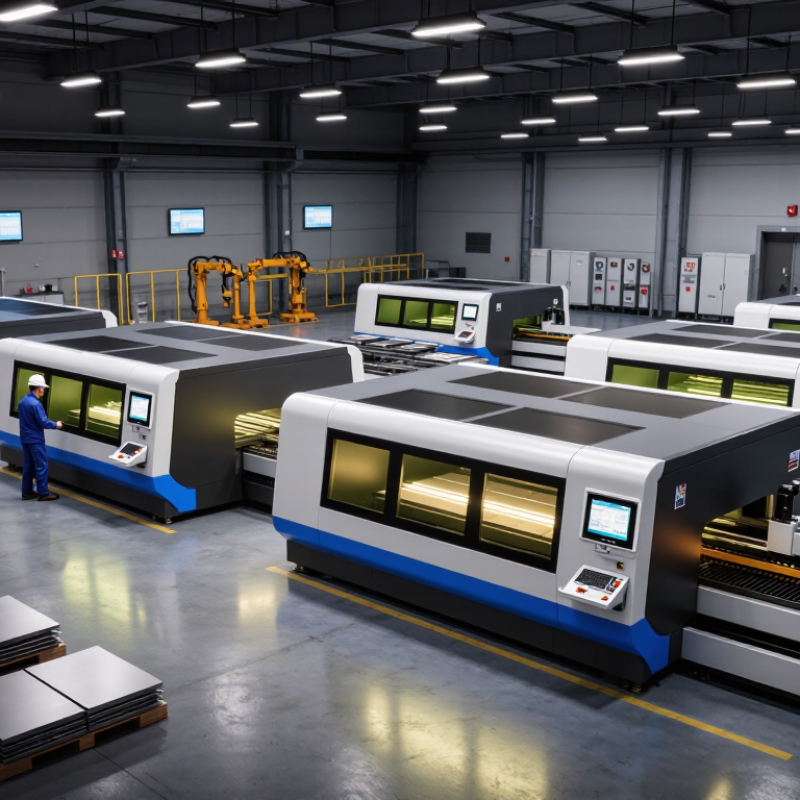
Industrial Laser Cutting in China: Technology, Applications, and Market Scope
China’s industrial laser cutting sector has moved from basic sheet processing to highly automated production. Top manufacturers now offer fiber laser systems, enclosed worktables, tube-cutting modules, loading robots, and production monitoring. Power levels may range from a few kilowatts to over 20 kW, depending on material, thickness, and cutting speed. Steel, stainless steel, aluminum, copper, and fabricated panels are common targets. Applications include automotive parts, agricultural machinery, construction equipment, kitchen hardware, and electrical cabinets.
Market scope is broad, but machine performance is not defined by laser power alone. In factory evaluations, buyers should inspect edge quality, pierce time, nesting software, uptime records, and operator safety. A clean cut on a showroom sample proves little. Test the actual material and thickness used in production. Service response also matters, especially when lenses, nozzles, or motion components require replacement. A recurring weakness is choosing equipment from a ranking without checking local technical support. That decision can create hidden downtime.
Tips: Request three material tests. Measure kerf width and burrs. Review maintenance records. Confirm spare-part availability. Ask for training details. Recheck energy consumption, because advertised figures may not match daily production. Personally, I would also inspect the factory’s calibration process. It is easy to overlook, yet small alignment errors can become expensive across thousands of parts.
How to Evaluate China’s Top Industrial Laser Cutter Manufacturers
Evaluating China’s top industrial laser cutter manufacturers requires more than comparing catalog prices. Fortune Business Insights’ 2024 report estimates the global laser cutting machine market will grow steadily through 2032, driven by automation and metal fabrication demand. Growth attracts capable factories, but also inconsistent suppliers. Ask for audited ISO 9001 records, traceable component lists, and production photographs. Verify whether safety systems follow ISO 12100 and electrical requirements match the destination market.
Request a sample-cut trial using your actual steel grade, thickness, and tolerances. Measure edge roughness, kerf width, piercing time, and dimensional repeatability. Small differences become expensive across thousands of parts. Check positioning accuracy against ISO 230-2 methods, not only a sales brochure. A reliable manufacturer should provide test data, calibration records, and a clear acceptance protocol.
Service capacity matters. Deloitte’s industrial service research reports that unplanned downtime can create substantial manufacturing losses, so response time deserves a contract clause. Ask how many trained engineers support your region, which spare parts are stocked locally, and how remote diagnostics work. Review three customer references, preferably from similar production environments. I have found that factory tours can mislead; polished machines do not prove stable output. A live, unscripted production test is more revealing. Still, even a good test is only a snapshot. Supplier evaluation should include warranty exclusions, software updates, operator training, and five-year operating costs.
Top 10 Chinese Manufacturers by Products, Capabilities, and Industry Focus
China’s top ten industrial laser cutter manufacturers are best compared by product range, engineering depth, and industry focus. The leading group builds fiber laser systems for carbon steel, stainless steel, aluminum, and copper. Several manufacturers specialize in 3015 and 4020 sheet platforms, while others develop large-format tables for shipbuilding and heavy machinery. Tube-cutting models, bevel-cutting heads, and automatic loading systems are also common.
The strongest manufacturers combine 6 kW to 20 kW laser sources with rigid welded beds and precise motion systems. Some focus on automotive suppliers, where repeatability and cycle time matter most. Others serve metal fabrication workshops needing flexible cutting, compact footprints, and easier maintenance.
A few concentrate on aerospace or energy components, requiring tighter process control and documented inspection. Their capabilities may include nesting software, robotic handling, remote diagnostics, and customized production lines.
Product brochures can look remarkably similar. Real performance is less uniform. Buyers should request test cuts using their own material, especially reflective metals and thick plate. Check edge quality, pierce time, fume extraction, software stability, and service response. Certifications, spare-parts availability, operator training, and installation records deserve equal attention. A manufacturer may claim broad expertise but lack strong local support. That weakness can become expensive. This ranking should remain practical, not absolute, because factory visits and independent trials may change the order.
Quality, Certification, Customization, and After-Sales Service Comparison
Top 10 Industrial Laser Cutter Manufacturers in China?
Comparing China’s top industrial laser cutter manufacturers requires more than checking cutting speed. Examine frame rigidity, beam stability, motor accuracy, and performance during eight-hour production shifts. Request sample cuts using your actual steel, aluminum, or stainless-steel thickness. Inspect edges under bright light. Rough corners and excessive slag reveal weaknesses quickly. Quality claims need factory records, inspection reports, and traceable component details. Relevant certifications, electrical safety documents, and export compliance evidence also deserve careful review.
Customization separates a standard machine from a workable production tool. Reliable manufacturers should adjust table size, laser power, software functions, extraction systems, and loading methods. Ask for engineering drawings before placing an order. A practical supplier explains limits instead of promising everything. That matters. Some machines perform well in demonstrations but lose precision after continuous operation. This is an easy detail to miss. Independent testing, warranty terms, and spare-parts availability can expose that gap. Service response time should be compared in writing, including remote diagnosis, technician visits, training, and replacement-part delivery.
Tips: Send identical test files to all shortlisted manufacturers. Compare cut quality, power consumption, setup time, and operator feedback. Ask for customer references using similar materials. Check whether manuals are clear and regularly updated. A low purchase price may become expensive when downtime, training, and delayed repairs accumulate. Also, certification labels alone are not proof of consistent manufacturing quality; verify their scope and validity.
Choosing the Right Chinese Laser Cutter Manufacturer for Your Business
Choosing the Right Chinese Laser Cutter Manufacturer for Your Business
A serious buyer should compare more than machine prices when reviewing China’s top industrial laser cutter manufacturers. Cutting capacity, frame strength, control systems, and service access directly affect production stability. Visit the factory if possible. Ask to inspect assembly areas, testing records, and quality controls. This evidence matters. Good documentation matters.
A practical evaluation begins with your own materials and workload. Request test cuts using your actual stainless steel, carbon steel, or aluminum sheets. Watch the cutting speed, edge smoothness, pierce marks, and heat distortion. Thin stainless steel may look excellent in a demonstration. Your thicker plate may behave differently. Small details matter.
Also verify the laser source, cutting head, software compatibility, warranty terms, and spare-parts availability. A low quotation can hide expensive installation or delayed technical support. Yet price alone should not decide the purchase. One overlooked question is operator training. Can the supplier teach your team safe setup, maintenance, and fault diagnosis? That detail affects daily output. Check response times through written communication before signing. Factories may promise fast support, but practical evidence is stronger. I would rather choose a slightly more expensive supplier with clear records than accept uncertain savings. This choice still requires careful review, because even a well-built machine can disappoint when the application study is incomplete.