Why Is Tyre Pyrolysis Plant Price So Different?
Why Is Tyre Pyrolysis Plant Price So Different? This question often appears when investors compare several equipment quotations. Two plants may process the same number of waste tyres, yet their prices can differ sharply. The difference is rarely explained by capacity alone.
In real project evaluations, the reactor design matters first. A carbon-steel reactor may cost less than a thicker, heat-resistant alloy structure. Continuous systems usually require more automation, feeding equipment, cooling units, and control instruments. These additions raise the Tyre Pyrolysis Plant Price, but they may reduce manual work and improve operating consistency. Small details matter. A reliable temperature sensor can protect product quality. A weak condenser may increase maintenance pressure.
Environmental equipment also changes the quotation. Gas cleaning, dust control, and safe vapour handling require careful engineering. Installation support, spare parts, operator training, and warranty terms can add value that is not visible in a basic price sheet. Sometimes, the cheapest offer excludes essential equipment. That is a risk. However, an expensive quotation is not automatically better. Buyers should inspect technical specifications, material certificates, production records, and after-sales arrangements before making a decision.
The most useful comparison considers total project cost, expected output, energy use, labour needs, and maintenance frequency. Ask practical questions. How long does heating take? How is temperature controlled? What happens during a power interruption? These answers reveal more than a headline number. Pricing analysis is not perfect, and supplier claims still require verification. A careful review helps separate genuine engineering value from attractive but incomplete quotations.
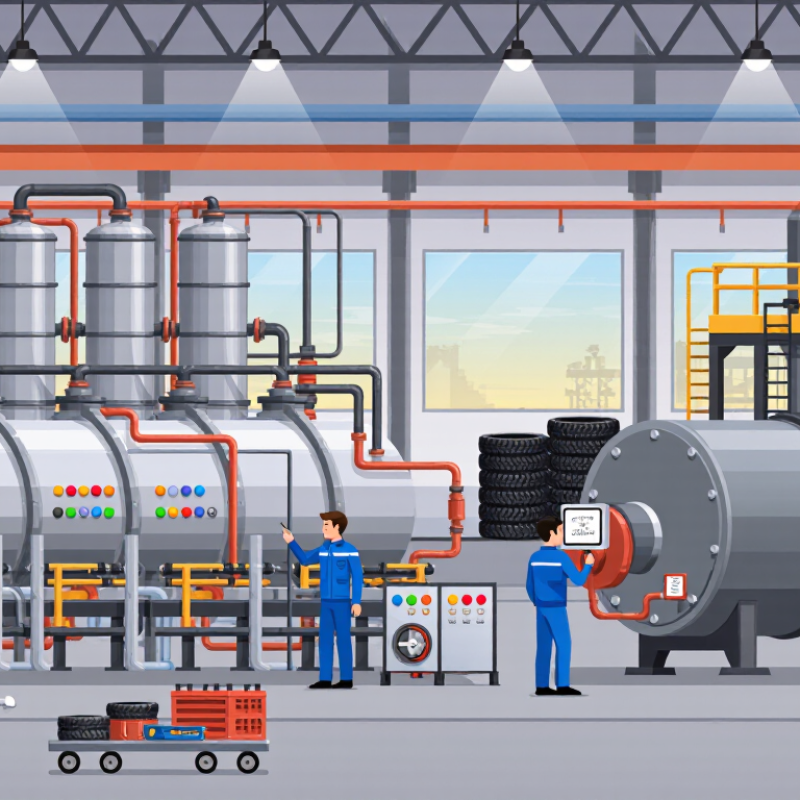
What a Tyre Pyrolysis Plant Does
Why Is Tyre Pyrolysis Plant Price So Different?
A tyre pyrolysis plant converts waste tyres into useful secondary materials. Shredded tyres enter a sealed reactor, where controlled heat breaks rubber into vapors, gas, carbon-rich char, and steel. Oxygen is excluded. This prevents open burning and supports process control.
The vapors cool into tyre pyrolysis oil. Non-condensable gas can return to the heating system. Recovered steel requires separation and cleaning. The remaining char may need milling, magnetic removal, and further treatment before industrial use. A technical review in Renewable and Sustainable Energy Reviews commonly reports yields near 35–45% oil, 30–40% char, 10–15% steel, and 8–15% gas. Actual results vary with tyre composition and reactor operation.
Feedstock preparation changes plant pricing sharply. So do reactor capacity, feeding systems, condensation design, emission controls, automation, and product upgrading. The European Tyre and Rubber Manufacturers’ Association reports roughly 3.5 million tonnes of end-of-life tyres arise annually in Europe. That scale makes reliable handling important. A low quoted price may exclude shredding, installation, testing, or pollution-control equipment. It may look attractive. Later, it can become expensive.
I have seen one practical weakness in many comparisons: yield figures are treated as universal. They are not. Passenger tyres, truck tyres, moisture, and wire content can produce different results. Buyers should request tested feedstock data, energy balances, maintenance records, and measured emissions. A brochure is not operating evidence.
Why Is Tyre Pyrolysis Plant Price So Different?
A tyre pyrolysis plant thermally decomposes waste tyres in a low-oxygen environment, producing pyrolysis oil, recovered carbon black, steel and non-condensable gas. The product mix below shows representative midpoint values from commonly reported tyre pyrolysis mass-balance ranges; actual results vary with tyre composition, operating temperature and feed preparation.
Plant prices differ because equipment capacity, batch or continuous operation, automation, tyre shredding systems, heating design, condensation efficiency, gas recycling and emission-control equipment can substantially change the required investment. Higher-specification systems generally provide greater throughput, improved process control and stronger environmental performance.
Which Design Features Influence Plant Pricing
Tyre pyrolysis plant prices differ because design decisions change both equipment cost and operating risk. A small batch reactor may need less automation, but it requires more manual loading and cooling time. Continuous systems cost more, yet they can provide steadier production and lower labour demand. The design must match the actual feedstock, not a brochure’s ideal tyre.
Feed preparation is a major pricing factor. Whole tyres need shredding, steel separation, and controlled feeding. These machines can add substantial capital cost before the reactor is installed. The European Tyre and Rubber Manufacturers’ Association reported nearly 3.9 million tonnes of end-of-life tyres in Europe in 2022. That scale shows why high-throughput designs often justify stronger conveyors and automated feeding. However, a smaller operator may overpay for unused capacity.
Heat recovery, condensation, gas cleaning, and emission monitoring also influence the final quotation. Peer-reviewed process reviews commonly report tyre pyrolysis yields of about 35–45% oil, 30–35% solid residue, 10–15% gas, and 10–15% steel, depending on feedstock and operating conditions. Better condensation can improve oil recovery, while upgraded carbon processing requires extra milling and separation equipment. Safety systems add cost, but cutting them is a false economy. The U.S. Environmental Protection Agency’s scrap-tyre guidance also stresses fire prevention and controlled storage. Design estimates can still be imperfect; feed moisture, tyre mix, and local utility prices often change the real return.
How Capacity and Automation Change Investment Costs
Why Is Tyre Pyrolysis Plant Price So Different?
How Capacity and Automation Change Investment Costs
Capacity is one of the clearest reasons pyrolysis plant prices vary. A small unit may process several tonnes of tyres daily, while a larger system requires bigger reactors, conveyors, condensers, and storage tanks. More capacity also demands stronger foundations, wider feeding areas, and higher installation costs. The reactor is not the only cost.
Automation changes the investment in a different way. Manual feeding and temperature control may reduce the purchase price, but they require more operators and closer supervision. An automated system can manage feeding, heating, pressure monitoring, and shutdown procedures with fewer workers. Sensors and control panels cost more initially. They can improve consistency and reduce avoidable operating mistakes.
In practical cost reviews, I examine the complete project rather than the equipment quotation alone. Freight, civil work, utilities, commissioning, maintenance access, and staff training can change the final budget. A higher-capacity plant may lower the processing cost per tonne, but only when enough feedstock is available. Otherwise, expensive equipment may sit idle.
That is the uncomfortable part.
Buyers sometimes compare machines by capacity alone. This can produce a misleading result. A realistic assessment should include daily tyre supply, local energy prices, labor availability, product handling, and expected operating hours. Automation is not automatically better in every facility. It becomes valuable when stable production, safety monitoring, and labor control justify the added investment.
Why Is Tyre Pyrolysis Plant Price So Different? - How Capacity and Automation Change Investment Costs
| Nominal Capacity | Typical Process Configuration | Automation Level | Indicative Equipment Cost
(USD) | Estimated Installed Project Cost
(USD) | Typical Operators
per Shift | Typical Oil Yield
by Weight | Main Cost Drivers |
| 5 tonnes/day | Batch reactor; manual or semi-automatic feeding and discharge | Basic temperature control, manual material handling, limited monitoring | $250,000–$450,000 | $400,000–$750,000 | 4–7 | 35%–45% | Low throughput, manual labor, civil works, and basic emission-control requirements |
| 10 tonnes/day | Batch or semi-continuous reactor with mechanical feeding | Semi-automatic feeding, PLC temperature control, assisted discharge | $450,000–$800,000 | $700,000–$1,250,000 | 5–8 | 35%–45% | Larger condensers, shredding equipment, material conveyors, and increased safety systems |
| 20 tonnes/day | Multiple batch reactors or a small continuous processing line | Automated feeding, PLC/SCADA supervision, automated oil collection | $800,000–$1,400,000 | $1,250,000–$2,200,000 | 7–11 | 38%–48% | Parallel reactors, automated controls, larger gas systems, fire protection, and electrical infrastructure |
| 30 tonnes/day | Continuous reactor or integrated multi-reactor system | High automation, automatic feeding and char discharge, centralized control room | $1,200,000–$2,000,000 | $1,900,000–$3,200,000 | 8–13 | 38%–48% | Continuous feeding systems, heat recovery, gas cleaning, automation, and regulatory compliance |
| 50 tonnes/day | Large continuous line or several synchronized reactors | Advanced automation, remote monitoring, automated dosing and product handling | $2,000,000–$3,800,000 | $3,200,000–$5,800,000 | 12–18 | 40%–50% | High-capacity shredding, redundant process equipment, advanced emission controls, storage, and site utilities |
Planning assumptions: The figures are indicative budgetary ranges in 2026 USD for processing passenger-car and truck tyres. Equipment cost generally covers the reactor, condenser, basic oil and gas systems, and control equipment. Installed project cost may additionally include tyre shredding, civil works, electrical installation, utilities, storage tanks, fire protection, environmental systems, engineering, commissioning, permits, freight, and local taxes. Actual oil yield depends on tyre composition, steel and textile content, operating temperature, residence time, and product separation efficiency.
Why Fuel, Emission, and Safety Systems Affect the Price
Why Is Tyre Pyrolysis Plant Price So Different?
A tyre pyrolysis plant can look simple in a brochure. The reactor is only one cost center. Fuel, emission, and safety systems often create the largest price differences. A cheap quotation may exclude gas filtration, pressure control, or emergency shutdown equipment. That difference matters.
Fuel systems may include condensers, buffer tanks, burners, pumps, and flare units. Non-condensable gas can support heating, but its composition changes with feedstock and operating conditions. Stable combustion needs flame monitoring and automatic gas isolation. Emission systems may require cyclones, scrubbers, activated carbon, or thermal oxidation. The correct combination depends on local permits and measured pollutants. The US EPA Air Pollution Control Cost Manual shows that control costs rise with pollutant load, gas volume, and removal efficiency. More equipment is not always better.
Safety hardware adds less visible value. Gas detectors, pressure relief, inerting, fire protection, and interlocks protect workers and equipment. NFPA 86 and NFPA 30 provide useful benchmarks for industrial ovens and flammable-liquid handling. The European Commission’s Waste Incineration BREF also highlights monitoring and control discipline, although pyrolysis applications need site-specific review. ETRMA’s 2023 end-of-life tyre statistics reported roughly 3.8 million tonnes in the European market, showing the scale of the feedstock challenge. Still, the first budget is rarely perfect. Buyers should request line-item costs, test data, maintenance assumptions, and emission guarantees before comparing offers.
How Installation, Standards, and After-Sales Service Add Costs
Why Is Tyre Pyrolysis Plant Price So Different?
Installation often explains the first major price gap. ETRMA’s End-of-Life Tyres Management report records more than three million tonnes of waste tyres annually in Europe. Handling that volume requires more than a reactor. A compliant site may need fire protection, storage bays, drainage, electrical upgrades, and emission-control equipment. These additions can increase the project budget sharply. A cheaper quotation may exclude civil works, utility connections, or commissioning support.
Standards also change the engineering bill. ATEX requirements can affect equipment used in potentially explosive atmospheres. NFPA guidance highlights combustible-dust risks, while ISO 14001 supports structured environmental management. Meeting these expectations may require sensors, enclosed conveyors, grounding systems, and continuous monitoring. The International Energy Agency repeatedly links industrial decarbonisation with better efficiency and emissions control. That principle matters here. Cleaner operation usually needs more capital.
After-sales service is another overlooked cost. A serious contract may include operator training, spare seals, remote diagnostics, and scheduled inspections. Downtime is expensive. A 2023 report from the U.S. Tire Manufacturers Association shows the scale of tyre recovery activity, with millions of tyres managed each year. That pressure makes stable operation valuable. Still, service packages are not always transparent. Some buyers discover that travel, software, or replacement parts cost extra. I would question every exclusion before comparing prices.