Buying a freeze dryer for global shipping requires more than comparing chamber size and purchase price. The right machine must survive long transit, varied climates, customs inspections, and different electrical standards. It should arrive protected, documented, and ready for safe commissioning.
Dr. Michael J. Pikal, a widely respected lyophilization scientist, described the central purpose clearly: “The objective of freeze-drying is to produce a stable product.” That principle should guide every buying decision. A suitable unit needs dependable vacuum control, consistent shelf temperatures, an efficient condenser, and clear data recording. Ask for performance tests, calibration records, operating manuals, and service contacts before payment. Small details matter. A damaged vacuum pump, missing voltage converter, or poorly secured touchscreen can delay installation for weeks.
When you Buy Freeze Dryer equipment for international delivery, confirm destination voltage, frequency, plug type, crate dimensions, gross weight, and lifting requirements. Check refrigerant information and electrical certifications for the receiving market. Confirm whether local technicians can obtain replacement seals, sensors, oil, and filters. These parts may seem ordinary. They can stop production.
Packaging also deserves attention. Shock indicators, moisture barriers, and reinforced corner protection reduce transit risks. Temperature-sensitive electronics may need additional safeguards. I would not pretend every supplier handles this equally well. Some attractive quotations exclude freight insurance, port charges, installation, or import documentation. Request a complete landed-cost estimate, then review the assumptions carefully. A cheaper machine can become the costliest choice after one overlooked shipment problem.
Buying a freeze dryer for global shipping starts with the product, not the machine size. Measure batch mass, vial or tray loading, solvent content, and target residual moisture. For many biological materials, primary drying operates between 1 and 100 mTorr. FDA’s Process Validation guidance identifies critical process parameters and critical quality attributes as essential controls, so vacuum readings alone are insufficient.
Condenser temperature deserves equal attention. IAPWS ice-vapor-pressure data indicate approximately 30 mTorr equilibrium vapor pressure at −50°C. Therefore, a condenser rated at ≤−50°C can support moderate sublimation loads, but it may offer limited margin near the higher end of the 1–100 mTorr range. Colder conditions, such as −60°C or below, can provide more capture capacity for water-rich products. Check the actual heat-load curve.
Do not trust the nameplate. Ask for measured shelf temperature uniformity, ultimate vacuum under load, condenser capacity in kilograms of ice, and leak-rate testing. PDA Technical Report No. 64 emphasizes science-based cycle development and controlled scale-up. In practice, a 10 mTorr reading on an empty chamber proves little. The chamber may behave differently with wet product, packaging, and long transport preparation.
A common mistake is choosing the lowest possible pressure. That can slow vapor movement and extend drying. I would test three loads, record product temperature, and compare residual moisture after storage. Global shipping also adds vibration and temperature exposure. Validate the final container, not only the dryer.
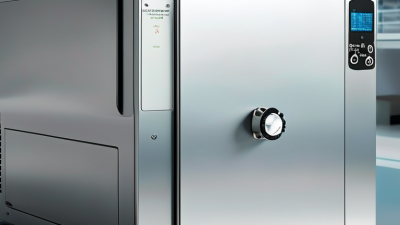
When buying a freeze dryer for global shipping, compare more than its advertised batch capacity. A “10 kg” rating may describe wet product, not finished product. Ask how the supplier defines the load. Product thickness, water content, and tray spacing can change drying time significantly. In practice, a one-kilogram batch may need nearly the same setup effort as a larger batch.
Shelf area shows how much product can be spread evenly. A machine with 0.5 square meters of shelf area may handle thin fruit slices efficiently, while dense food needs more space. Check usable shelf dimensions, not only the total number of trays. Leave room for airflow and expansion during freezing. Crowded trays often create uneven drying. That mistake is easy to make.
Ice load measures how much water the condenser can capture in one cycle. For a 1–10 kg batch, compare the expected water content with the condenser rating. A small ice load can force early defrosting or extend the cycle. I would also check chamber temperature, vacuum stability, power requirements, crate dimensions, and shipping weight. These details affect freight costs, customs paperwork, installation, and local electrical compatibility. Datasheets are useful, but real test records are better. Request cycle data using a product similar to yours, because nominal figures can look impressive while practical output remains disappointing.
Compare the required shelf area and ice load for typical 1–10 kg wet-product batches before selecting a freeze dryer for export.
Planning basis: 80% product water content and an average wet-product loading density of 8 kg/m². Ice load represents the water that must be captured during primary drying. Values are engineering estimates for equipment sizing, not brand-specific specifications.
When buying a freeze dryer for global shipping, electrical compliance deserves more than a voltage sticker. Specify an input range of 100–240 V, then verify 50/60 Hz compatibility, rated current, inrush current, fuse type, and protective-earth requirements. A unit may accept 100–240 V but still require different cords, plugs, or circuit protection. Ask for an IEC 61010-1 test report, not merely a declaration. This standard addresses laboratory equipment hazards, including shock, fire, insulation, and abnormal operation. Request the report number, testing laboratory, edition used, and product configuration. Details matter.
Local plug selection is equally practical. Confirm Type A, C, G, I, or another approved plug before dispatch. Do not rely on travel adapters for permanent operation; they can loosen, heat, or defeat grounding. The European Commission’s Safety Gate 2023 report recorded 3,412 alerts, with electrical appliances and equipment among the commonly notified categories. That figure shows why documentation matters during inspections. IEC’s 2023 organizational data covered 174 member countries, yet national certification and plug rules still differ. I would question any seller promising “worldwide compliance” without country-specific evidence. Check the nameplate, user manual, EMC documentation, and customs file together. One overlooked frequency marking can delay installation.
| Destination Market | Typical Supply Voltage | Frequency | Common Plug Types | Electrical Compatibility Check | Documentation to Request |
|---|---|---|---|---|---|
| United States and Canada | 120 V | 60 Hz | Type A, Type B | Confirm that the freeze dryer supports 120 V operation or that an appropriately rated transformer is supplied. Verify grounding and the required plug configuration. | Electrical nameplate, wiring diagram, test report, user manual, and applicable North American certification information. |
| European Union and European Economic Area | 230 V | 50 Hz | Type C, Type E, Type F | Check that the rated input includes 230 V and that the supplied cord set matches the destination country. Confirm protective-earth continuity. | EU Declaration of Conformity, CE-related technical documentation, risk assessment, and electrical safety test records. |
| United Kingdom and Ireland | 230 V | 50 Hz | Type G | Verify 230 V / 50 Hz compatibility and use a correctly fused Type G cord or approved replacement. Do not rely on a plug adapter for voltage conversion. | Electrical specifications, conformity documentation for the destination market, grounding details, and cord-set rating. |
| Australia and New Zealand | 230 V | 50 Hz | Type I | Confirm the input range, earth-pin arrangement, leakage-current performance, and suitability of the supplied Type I cord set. | Electrical test results, product rating label, installation instructions, and destination-market compliance evidence. |
| Japan | 100 V | 50 or 60 Hz, depending on region | Type A, Type B | A 100–240 V nameplate does not automatically confirm performance at 100 V. Obtain written confirmation of rated power, starting current, and frequency compatibility. | Manufacturer electrical declaration, 100 V operating confirmation, power-consumption data, and local compliance documentation where applicable. |
| Mainland China | 220 V | 50 Hz | Type A, Type I, Type C | Verify 220 V / 50 Hz operation, plug dimensions, earthing, and the required circuit-breaker rating for the installation site. | Chinese-language rating label where required, test reports, wiring diagram, and product conformity records. |
| India | 230 V | 50 Hz | Type C, Type D, Type M | Check compatibility with 230 V / 50 Hz supply, socket current rating, protective earth, and the plug type required by the facility. | Rating label, installation guide, electrical safety report, and any required local registration or conformity documents. |
| Brazil | 127 V or 220 V, depending on location | 60 Hz | Type N; Type A and Type B may also be encountered | Confirm the exact site voltage before shipment. A unit rated only for 220 V may not operate safely on a 127 V circuit. | Voltage and frequency declaration, local plug specification, safety test report, and destination-market conformity information. |
| United Arab Emirates and many Gulf countries | 230 V | 50 Hz | Type G | Verify 230 V / 50 Hz compatibility, Type G plug and fuse requirements, and the local import or conformity requirements. | Product datasheet, conformity certificate if required, electrical test report, and installation instructions. |
| South Africa | 230 V | 50 Hz | Type D, Type M, Type N | Confirm the socket and earth configuration at the installation site, together with the machine's input current and protection requirements. | Electrical rating label, wiring diagram, safety test report, and local conformity documentation where applicable. |
| Global purchasing checklist: The nameplate should clearly state input voltage, frequency, rated current or power, and protective-earth requirements. If the equipment is marked “100–240 V,” confirm whether the range is automatic or requires a selector, and verify the permitted frequency range. IEC 61010-1 addresses safety requirements for electrical equipment used in measurement, control, and laboratory applications; it does not by itself approve every country-specific plug, voltage, certification mark, or installation requirement. A plug adapter changes the physical connection only and does not convert voltage or frequency. Always obtain destination-specific confirmation before shipment. | |||||
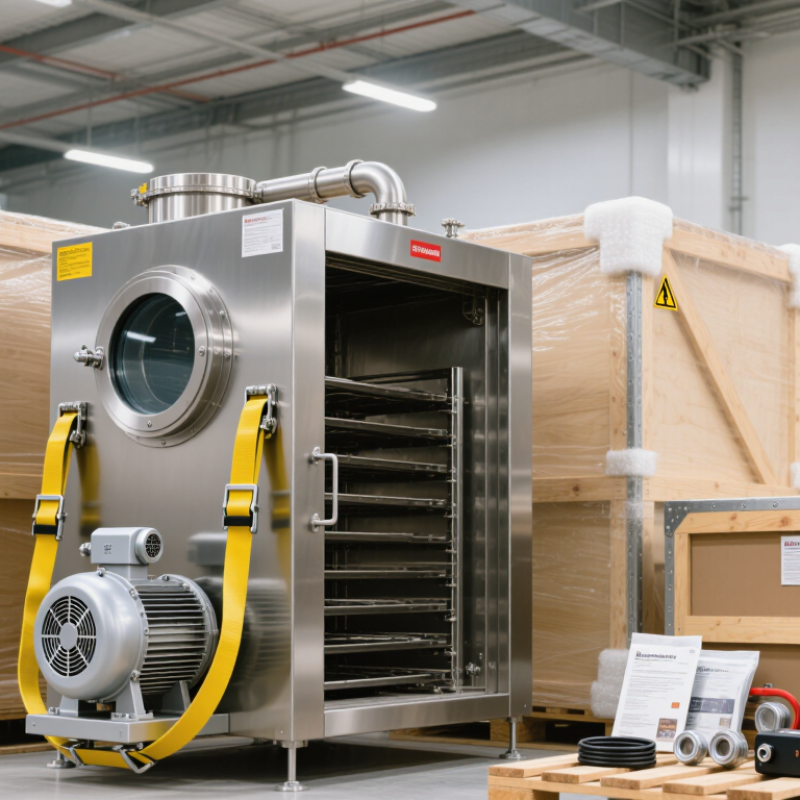
Buying a freeze dryer for global shipping starts with transport planning, not only machine capacity. I measure the unit after removing loose accessories, then add protective foam, a pallet, and the export crate. My first estimate was wrong by nearly 12 centimeters. Door clearance caused the problem. Leave space for forklifts and lifting points.
Crate size affects freight quotes, warehouse handling, and possible oversize charges. Record length, width, height, and gross weight in centimeters and kilograms. Gross weight includes the machine, crate, manuals, accessories, and moisture barriers.
A wooden crate should meet the destination’s applicable import requirements. Take clear photos of the packed unit and place the measurement sheet inside the document pouch.
The HS code must match the machine’s actual function and configuration. Do not guess from a supplier’s old invoice. Confirm the code with a licensed customs professional or the destination customs authority. Incoterms also need careful wording. Terms such as FCA, CPT, or DAP assign different costs, risks, and delivery duties. Specify the named place, such as “FCA export warehouse,” in the sales contract. Ask who handles import clearance, taxes, unloading, and final delivery. Small wording errors can become expensive. Recheck everything.
When buying a freeze dryer for global shipping, audit the supplier beyond the quotation. MarketsandMarkets’ 2024 report projects the lyophilization equipment market to grow at about 7.3% annually through 2029. Demand is rising, but supplier quality remains uneven.
Request a Factory Acceptance Test (FAT) protocol before payment. It should record chamber vacuum, shelf temperature uniformity, condenser performance, alarms, and data logging. Ask for raw test records, not selected screenshots. During export, inspect shock indicators, moisture barriers, lifting points, and crate drawings. A clean factory tour can mislead.
Warranty terms need practical detail. Check coverage periods, response times, labor costs, travel exclusions, and software support. Request a recommended spare-parts list for two years, including vacuum seals, sensors, valves, filters, and control components. The supplier should state local stock levels and realistic delivery times.
Installation documents should include utilities, floor loading, electrical standards, refrigerant requirements, and commissioning steps. The FDA’s Process Validation guidance stresses documented, controlled qualification rather than visual acceptance alone. Ask whether installation and performance qualification can be completed remotely, with trained local technicians. Service contracts should define escalation routes and preventive-maintenance intervals. No checklist is perfect. My own audit would still require an independent technical review before final shipment.