Cuddon Freeze Dry Logo

2026 Best Freeze Dryer Types for Global Buyers

The 2026 Best Freeze Dryer Types for Global Buyers guide begins with a practical reality: equipment choice affects product quality, energy use, validation, and long-term operating costs. Market research reflects this growing importance. MarketsandMarkets has projected continued expansion in the lyophilization equipment sector, supported by pharmaceutical manufacturing, biotechnology, and food preservation. Grand View Research also identifies rising demand for freeze-drying systems across healthcare and specialty food applications.

The market is expanding.

However, growth forecasts are not purchase instructions. A laboratory Freeze Dryer may suit small batches, while a pilot-scale shelf system offers better process development. Industrial units require careful review of condenser capacity, vacuum stability, shelf temperature uniformity, cleaning access, and after-sales service. A frozen vial should dry evenly, not merely look acceptable after unloading.

Regulatory expectations also matter. The U.S. Food and Drug Administration emphasizes process control, equipment qualification, and consistent manufacturing practices for pharmaceutical production. United States Pharmacopeia guidance and established good manufacturing practice principles further support documented validation and traceability. Buyers should therefore compare supplier records, installation support, spare-parts availability, and local technical expertise.

Some assumptions need testing.

Energy consumption is often presented too simply. Actual costs depend on batch size, product formulation, condenser temperature, vacuum-pump design, loading patterns, and electricity prices. A lower purchase price may create higher ownership costs over several years. This guide examines laboratory, pilot, industrial, manifold, and automated Freeze Dryer types through those practical factors, while recognizing that regional standards, climate, import conditions, and operator experience can change the final decision. Forecasts inform the shortlist; verified specifications and production trials should make the decision.
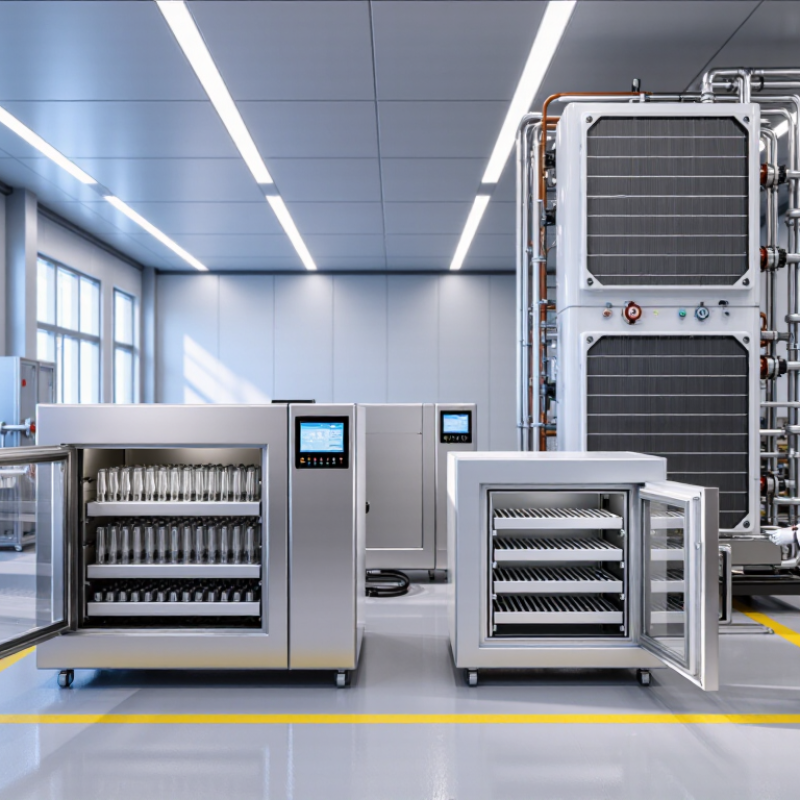
2026 Best Freeze Dryer Types for Global Buyers

Freeze-Drying Fundamentals: 611 Pa and 0.01°C Define Ice Sublimation

A freeze dryer works by removing water as vapor, not by melting it first. The key reference is water’s triple point: 611 Pa and 0.01°C. Near this pressure, liquid water cannot remain stable. When ice receives controlled heat, it changes directly into vapor through sublimation.

Pressure alone does not guarantee reliable drying. The chamber must stay below the triple-point pressure, while shelves provide gentle energy to the frozen product. Sensors track chamber pressure, shelf temperature, and product temperature. If the product warms too quickly, its structure may collapse, causing shrinkage, sticky surfaces, or poor rehydration. This is where practical testing matters. A recipe that works for fruit may fail with proteins or sensitive powders.

The primary drying stage removes visible ice. The secondary stage reduces tightly bound moisture at a higher product temperature. Operators should confirm the endpoint with pressure response, product probes, and moisture testing when possible. Readings can drift, and one sensor may not represent every tray. That limitation is easy to overlook. Careful documentation, calibrated instruments, and small pilot batches improve repeatability for global buyers comparing freeze-dryer types.
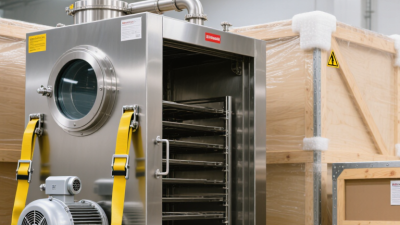
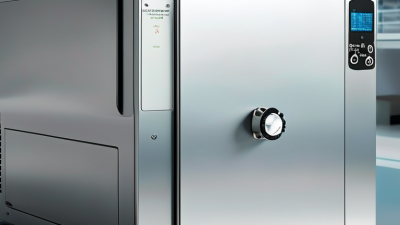
Laboratory Freeze Dryers: 1–12 L Ice Capacity for R&D Batches

Laboratory freeze dryers with 1–12 L ice capacity suit R&D batches, formulation screening, and pilot-scale process development. The capacity describes the maximum ice a condenser can hold, not the liquid volume in each vial. A 4 L batch may produce more than 4 L of ice after freezing. This distinction is often missed.

MarketsandMarkets estimated the global lyophilization equipment market at about USD 3.8 billion in 2023, with continued growth projected through 2028. Its report reflects stronger demand for development and small-batch manufacturing equipment. However, market growth does not replace process data. Researchers should compare shelf area, condenser temperature, vacuum stability, and drying time before selecting a unit. FDA process-validation guidance also stresses documented, reproducible control of critical parameters.

For a 1–12 L system, vial loading patterns matter. A crowded shelf can slow heat transfer and create uneven residual moisture. Check the chamber’s usable shelf area, not only its advertised ice capacity. Stoppering under vacuum can reduce handling exposure, but it adds mechanical complexity. Smaller units may also recover slowly after repeated cycles. That detail is easy to overlook. In practice, I would test the intended formulation at partial and maximum loads. One limitation remains: published capacity figures rarely describe real product behavior. Independent cycle trials are still necessary.

2026 Best Freeze Dryer Types for Global Buyers – Laboratory Freeze Dryers: 1–12 L Ice Capacity for R&D Batches

Technical figures are representative laboratory ranges used for product comparison. Actual performance depends on formulation, fill depth, vial size, ambient conditions, and process development.
Freeze Dryer Type Nominal Ice Capacity Typical Condenser Temperature Typical Shelf Temperature Range Chamber Configuration Typical R&D Batch Scale Common Vacuum Range Best-Fit Applications
Compact Benchtop Manifold Dryer 1–2 L of ice Approximately −50 to −55 °C Usually about −40 to +60 °C; often without active shelf control Flasks, ampoules, or small vials connected to a manifold Approximately 0.1–0.8 L of liquid formulation, depending on container and solids content Typically below 0.1 mbar during primary drying Small formulation screens, research samples, microbial cultures, and pilot sample preparation
Benchtop Tray Freeze Dryer 2–4 L of ice Approximately −50 to −55 °C About −40 to +60 °C with controlled shelf heating and cooling One or more shelves with a product chamber; optional manifold or stoppering arrangement Approximately 0.5–2 L of liquid formulation Typically 0.05–0.2 mbar during primary drying Process development, excipient screening, food samples, diagnostics, and laboratory-scale biologics
Stoppering Benchtop Freeze Dryer 3–6 L of ice Approximately −55 to −85 °C, selected according to solvent and product requirements About −40 to +60 °C; some systems support controlled ramping and recipe control Temperature-controlled shelves with partially or fully stoppered vials inside the chamber Approximately 1–3 L of liquid formulation in laboratory vials Typically 0.02–0.2 mbar during primary drying Injectable formulation development, aseptic process studies, vial cycle development, and scale-up research
Low-Temperature Laboratory Freeze Dryer 4–8 L of ice Approximately −80 to −105 °C About −50 to +60 °C, depending on shelf design Tray or vial chamber designed for products requiring lower condenser temperatures Approximately 1–4 L of liquid formulation Typically 0.01–0.2 mbar during primary drying Solvent-sensitive formulations, products with low eutectic temperatures, and demanding biological research
Laboratory Pilot Freeze Dryer 6–12 L of ice Approximately −55 to −85 °C About −50 to +60 °C with programmable shelf temperature control Multiple shelves, larger product chamber, optional vial stoppering, and process monitoring ports Approximately 2–8 L of liquid formulation, subject to fill volume and loading pattern Typically 0.01–0.2 mbar during primary drying Scale-up studies, engineering batches, clinical-sample development, and transfer to production equipment
Manifold-and-Chamber Combination Dryer 2–8 L of ice Approximately −50 to −85 °C About −40 to +60 °C when equipped with controlled shelves Separate manifold ports plus a tray or vial chamber for flexible sample formats Approximately 0.5–4 L of liquid formulation Typically 0.02–0.2 mbar during primary drying Mixed laboratory workloads requiring both flask drying and controlled vial or tray cycles

Pilot Freeze Dryers: 10–100 kg Ice Capacity for Scale-Up Studies

For global buyers, pilot freeze dryers with 10–100 kg ice capacity offer a practical bridge between laboratory trials and production planning. They provide enough space to test vial layouts, shelf loading, condenser demand, and batch thickness under controlled conditions. In my experience, scale-up decisions become clearer when operators record product temperature, chamber pressure, shelf temperature, and endpoint behavior together. A larger chamber does not automatically reproduce a small-cycle result. It exposes hidden heat-transfer differences. Keep that in mind.

A useful pilot system should support adjustable shelf temperatures, stable vacuum control, suitable condenser temperatures, and reliable data logging. The 10–100 kg range covers several study goals, from formulation screening to engineering batches. Capacity must match actual ice removal, not only shelf area. A dense load can challenge vapor flow, while a light load may produce misleadingly fast drying times. Careful instrumentation helps identify the primary drying endpoint without relying on appearance alone.

For scale-up studies, buyers should examine cleaning access, chamber geometry, loading tools, utility demand, and operator safety. These details affect repeatability more than glossy specifications. Documentation should include calibration records, material certificates, alarm testing, and service procedures. No pilot cycle is perfect. The first run may reveal uneven product resistance or a weak pressure signal. That is useful evidence, not failure. Review the data, adjust one variable at a time, and confirm results with repeat batches before transferring parameters to a larger unit.

Production Freeze Dryers: −40°C Condensers for GMP-Scale Processing

Production freeze dryers support high-volume, temperature-sensitive manufacturing. Their −40°C condensers capture vapor rapidly during primary drying. This helps protect product structure and shorten cycle risks. A 2024 Fortune Business Insights report valued the global lyophilization market at approximately USD 5.3 billion in 2023. It also projected continued growth through 2032. That expansion increases pressure on equipment qualification and process control.

At GMP scale, condenser temperature alone is insufficient. Engineers must check ice capacity, shelf uniformity, vacuum stability, and batch loading patterns. A −40°C condenser may struggle when shelves are overloaded. It may also recover slowly after a heavy vapor surge. Practical trials should measure chamber pressure, product temperature, and endpoint behavior across the full load. EU GMP Annex 1 emphasizes contamination control, validated processes, and documented monitoring. These requirements should shape the freeze dryer design from the beginning.

Commissioning should include empty-chamber tests, thermal mapping, leak testing, and loaded engineering runs. Operators need clear alarms and repeatable cleaning procedures. I would not approve a system based only on a brochure specification. The tempting mistake is treating −40°C as a guarantee. In reality, condenser performance depends on vapor load, refrigeration recovery, and maintenance quality. Some projects also underestimate door seals and drain design. Those small details can delay release more than expected. Consistent data matters more than impressive cooling numbers.

Global Buyer Criteria: Throughput, Energy, 50/60 Hz, CE, and UL

2026 Best Freeze Dryer Types for Global Buyers

Global Buyer Criteria: Throughput, Energy, 50/60 Hz, CE, and UL

Freeze-dryer selection should begin with measurable output, not shelf space. Specify kilograms of ice removed per 24 hours, condenser capacity, and batch cycle time. A chamber that holds 100 kilograms may process far less material under a heavy-water load. Ask suppliers for test data using your product, not only empty-tray results. Throughput varies.

Energy deserves equal attention. The IEA Energy Efficiency 2024 report recorded a 2.2% improvement in global energy efficiency during 2023. That figure is not a freeze-dryer benchmark, but it shows why energy measurement matters. Compare kWh per batch and kWh per kilogram of water removed. Record vacuum-pump hours, defrost time, and refrigeration recovery. A neat spreadsheet can still lie.

Frequency compatibility is practical risk control. Confirm voltage, phase, plug format, and 50/60 Hz operation before ordering. A frequency mismatch can affect motors, pumps, and condenser performance. For European sales, CE conformity must match the applicable requirements and technical file. For North American projects, request relevant UL evaluation and documentation. Do not treat either mark as proof of product quality. Request electrical schematics, noise data, factory acceptance records, and service procedures. I would also budget for local commissioning. That cost is often forgotten.

2026 Best Freeze Dryer Types for Global Buyers

Comparison by typical batch ice capacity and electrical input across laboratory, pilot, and production freeze dryers.

Laboratory systems generally support small research batches, pilot systems are designed for process scale-up, and production systems provide substantially higher throughput. Actual capacity and power demand vary with product formulation, condenser temperature, shelf area, vacuum level, and cycle design. Global buyers should also confirm 50/60 Hz compatibility, CE conformity for European markets, and UL or equivalent North American electrical approval where required.