Cuddon Freeze Dry Logo

2026 Top Freeze Dried Fruits Suppliers for Global Buyers

Sourcing Freeze Dried Fruits in 2026 requires more than comparing online prices. Global buyers need dependable suppliers, consistent quality, and clear export documentation. Product appearance can be impressive, yet texture may reveal poor processing. A crisp strawberry should break cleanly, not bend or feel sticky. These small details often influence customer satisfaction and repeat orders.

This guide introduces leading Freeze Dried Fruits suppliers for international buyers. It considers manufacturing experience, ingredient sourcing, freeze-drying technology, and quality-control systems. It also examines packaging performance, private-label support, minimum order quantities, and delivery capability. Reliable suppliers should provide batch information, product specifications, allergen statements, and relevant food-safety certifications. Traceability matters when products travel across several borders.

Supplier selection is rarely simple. A low quotation may hide weaker packaging or inconsistent particle sizes. A famous company may still offer limited flexibility for smaller buyers. Samples, factory communication, and documented testing deserve careful attention. Do not rely on polished catalogs alone. Ask practical questions about moisture levels, storage conditions, shelf life, and container loading. This overview aims to support informed decisions, not replace professional verification. Market conditions can change quickly, and rankings may become outdated. That is worth remembering. Fresh evidence matters.
2026 Top Freeze Dried Fruits Suppliers for Global Buyers

What Are Freeze-Dried Fruits and Why Are They in Global Demand?

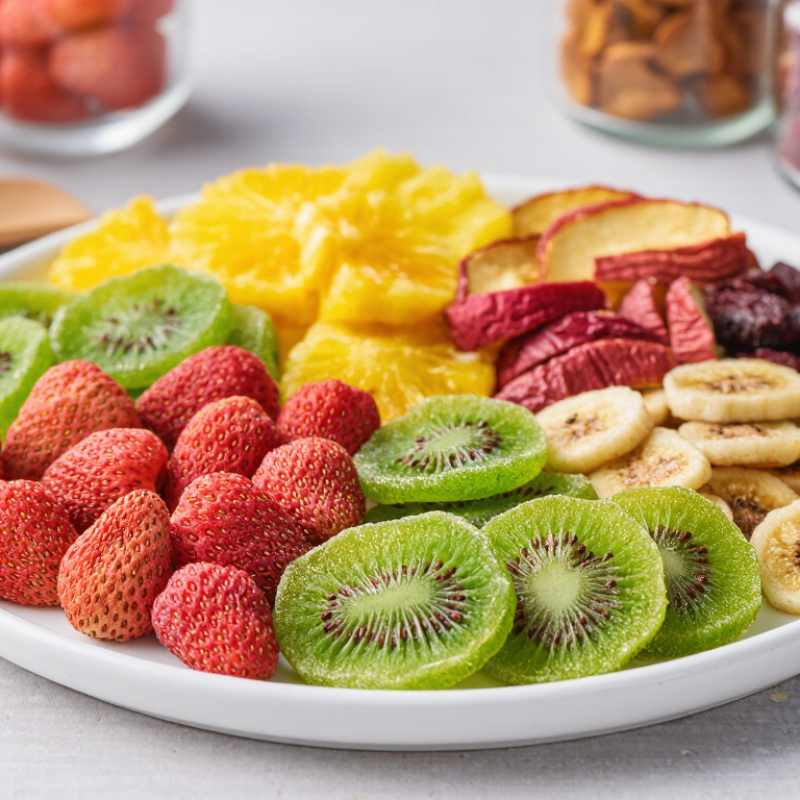
Freeze-dried fruits are fresh fruits preserved through freezing and low-pressure drying. This process removes ice as vapor, rather than melting it into liquid. The result is a light, crisp product with concentrated flavor, natural color, and much of the fruit’s original structure. It also reduces moisture, helping extend shelf life when packaging and storage are properly controlled.

Global demand is rising because these fruits fit modern eating habits. They are convenient for breakfast cereals, snack mixes, bakery fillings, beverages, and emergency food planning. Buyers also value their low shipping weight and easy portioning. However, freeze-drying is not magic. Quality can vary widely between suppliers. Fruit maturity, drying temperature, moisture targets, packaging barriers, and storage conditions all affect the final product. A bright appearance alone proves very little.

Tips: Ask for recent laboratory results, ingredient specifications, origin details, and sample batches. Check texture after opening the package. It should feel crisp, not rubbery or damp. Confirm allergen controls, traceability records, and lot information before placing large orders. Small test shipments are wiser than confident guesses. Buyers should also compare rehydration performance, because some applications need fruit that softens evenly. One detail is easy to miss: packaging damage may ruin excellent fruit before it reaches the customer. Reliable suppliers explain these risks clearly and provide consistent documentation.

How to Evaluate Freeze-Dried Fruit Suppliers in 2026

Global buyers need more than attractive catalogs when evaluating freeze-dried fruit suppliers in 2026. Grand View Research’s 2024 market analysis estimates strong growth in the global freeze-dried food sector through 2030. That expansion can attract inexperienced suppliers. Request production records, export history, and recent third-party audit results before discussing annual contracts.

Product quality should be measurable. Ask for moisture content, water activity, microbiological limits, pesticide-residue testing, and allergen controls. The Codex General Principles of Food Hygiene and ISO 22000 provide useful benchmarks for food-safety systems. Check the crunch. A reliable supplier should explain drying temperature, vacuum conditions, packaging materials, and storage limits without hiding behind vague terms. Small differences in fruit maturity can change color, aroma, and breakage rates.

Traceability matters. Each carton should connect to a batch, origin, processing date, and laboratory report. FAO’s 2023 food-loss report highlights the importance of better handling and storage across food supply chains. Therefore, inspect warehouse humidity control and transport procedures, not only factory photographs. Compare samples from different production lots. One perfect sample proves little. I would also challenge unusually low prices; they may reflect thinner pieces, excess powder, or weaker testing. This is not always true, but it deserves verification. Pilot orders, clear rejection terms, and documented corrective actions can expose problems before large shipments leave the port.

2026 Top Freeze Dried Fruits Suppliers for Global Buyers - How to Evaluate Freeze-Dried Fruit Suppliers in 2026

Evaluation Dimension Recommended 2026 Benchmark Why It Matters to Global Buyers Evidence to Request Suggested Weight
Raw Material Traceability Documented farm, lot, harvest-season, and country-of-origin records for every production batch. Supports recalls, customs documentation, sustainability claims, and consistent flavor and color. Traceability procedure, lot-code example, supplier approval records, and mock-recall results. 15%
Food Safety Certification An active, independently audited GFSI-recognized food-safety certification or an equivalent documented system. Reduces regulatory and retailer onboarding risk across international markets. Current certificate, audit scope, expiry date, latest audit summary, and corrective-action records. 15%
Microbiological Control Routine testing based on product risk, including Salmonella and other relevant pathogens; results must meet destination-market requirements. Freeze-drying reduces available water but does not replace hygienic processing or pathogen controls. Recent certificate of analysis, sampling plan, laboratory accreditation, and environmental-monitoring summary. 15%
Moisture and Water Activity Product specification should define moisture and water activity limits; a water activity target at or below 0.60 is commonly used for shelf-stable low-moisture foods, subject to product validation. Helps control microbial growth, texture loss, clumping, and quality deterioration during transport. Batch test results, calibrated water-activity instrument records, and product specification sheet. 10%
Ingredient and Additive Transparency Clear declaration of fruit ingredients, carriers, sweeteners, preservatives, sulfites, allergens, and processing aids. Prevents labeling errors and supports clean-label, allergen-control, and market-specific claims. Full ingredient statement, allergen declaration, product formulation, and change-control policy. 10%
Product Consistency Defined limits for fruit variety, cut size, color, breakage, foreign material, moisture, and sensory characteristics. Consistent specifications are essential for retail packs, cereal applications, bakery, snacks, and foodservice. Approved sample, specification sheet, retained-sample policy, inspection report, and complaint-rate data. 10%
Packaging and Barrier Protection High-barrier, sealed packaging with protection from moisture, oxygen, light, puncture, and crushing; nitrogen flushing may be used where validated. Freeze-dried fruit rapidly absorbs moisture, which can cause softening, oxidation, and quality loss. Packaging material specification, seal-integrity test, oxygen/moisture barrier data, and transit-test results. 10%
Shelf-Life Validation A validated shelf life commonly ranging from 12 to 24 months, depending on fruit, packaging, storage, and market requirements. Longer validated shelf life improves inventory flexibility and reduces expiration risk in ocean freight channels. Real-time or accelerated stability study, storage conditions, test intervals, and end-of-life quality criteria. 8%
Production Capacity and Continuity Documented monthly capacity, seasonal sourcing plan, backup utilities, preventive maintenance, and business-continuity procedures. Protects buyers from seasonal shortages, unexpected shutdowns, and inconsistent replenishment. Capacity statement, production schedule, contingency plan, maintenance program, and historical on-time delivery rate. 4%
Minimum Order Quantity and Lead Time Commercial MOQ should match the buyer’s channel; standard production lead time is commonly assessed at approximately 3–8 weeks after approval, excluding shipping. A practical MOQ and predictable lead time reduce working-capital pressure and stockout risk. Written quotation, production calendar, sample-to-production timeline, and historical delivery performance. 4%
Export Documentation and Regulatory Support Ability to provide commercial invoice, packing list, certificate of origin, certificate of analysis, health documents where required, and accurate HS-code support. Complete documentation minimizes customs delays, clearance costs, and compliance disputes. Redacted shipment document set, export-market experience, and regulatory contact process. 4%
Commercial Terms and Total Landed Cost Compare product price, packaging, inland freight, insurance, duties, testing, payment terms, and Incoterms rather than unit price alone. The lowest quoted price may not produce the lowest landed cost or lowest supply-chain risk. Formal quotation, Incoterms, payment terms, freight assumptions, duty information, and price-adjustment policy. 5%
Total Evaluation Weight 100%
Buyer note: Treat benchmark values as a supplier-screening framework. Final acceptance should be based on destination-market regulations, product-specific risk assessment, laboratory testing, approved samples, and a signed technical specification.

Key Product, Safety, and Certification Standards for Importers

2026 Top Freeze Dried Fruits Suppliers for Global Buyers

For importers, supplier selection should begin with product evidence, not attractive packaging. Freeze-dried fruit should show botanical identity, origin, harvest lot, moisture level, water activity, and shelf-life testing. A crisp strawberry slice can still hide uneven drying. Ask for recent certificates of analysis from an accredited laboratory. Test moisture, pesticide residues, heavy metals, pathogens, allergens, and foreign materials. Codex food-hygiene guidance, CXC 1-1969, supports hazard-based controls and documented verification.

Safety deserves serious attention. The World Health Organization estimates that contaminated food causes 600 million illnesses and 420,000 deaths globally each year. This figure covers all foods, but it explains why dried fruit cannot be treated as a low-risk snack. Suppliers should operate under a recognized system, such as ISO 22000 or an equivalent HACCP-based program. Importers should also verify sanitation records, environmental monitoring, recall procedures, and corrective actions. Certificates alone are not enough.

Packaging must protect fruit from moisture, oxygen, light, and crushing during long transit. Request migration declarations for food-contact materials and confirm compliance with the destination market. Supplier audits should compare production records with actual pallets. Small gaps matter. I would retain sealed samples from every lot and review them after arrival, because texture can change before the paperwork does. Some specifications remain imperfect, especially for color and breakage; buyers should define acceptable limits before signing contracts.

Leading Freeze-Dried Fruit Supplier Regions and Their Strengths

2026 Top Freeze Dried Fruits Suppliers for Global Buyers

Leading Freeze-Dried Fruit Supplier Regions and Their Strengths

Supplier regions shape product quality, pricing, and delivery reliability. China offers broad fruit availability, large processing capacity, and flexible private-label production. Its suppliers often handle strawberries, mangoes, peaches, and mixed fruit pieces. Buyers should verify factory audits, water activity results, and batch traceability. Large capacity does not always mean consistent texture.

Europe is valued for strict documentation, clean-label processing, and strong food safety systems. Poland, Germany, and the Netherlands serve buyers seeking dependable quality and efficient distribution. European suppliers may provide detailed allergen controls and recyclable packaging options. Costs can be higher, especially for certified organic products.

North America supports premium fruit ingredients, convenient logistics, and strong testing practices. The United States and Canada are suitable for cereal, snack, and beverage manufacturers needing stable specifications. Southeast Asia offers tropical fruits, including pineapple, banana, and dragon fruit. South American regions add distinctive berry and tropical fruit sources, but shipping times may require careful planning. Seasonal supply can change quickly.

Tips: Request recent laboratory reports, not only product samples. Compare moisture, water activity, particle size, and packaging barriers. Ask how suppliers manage harvest shortages. A small pilot order can reveal melting, color loss, or uneven pieces before a full contract. Also review delivery records and complaint response times. These details often matter more than a polished catalogue.

How Global Buyers Can Select and Manage the Right Supplier

How Global Buyers Can Select and Manage the Right Supplier

Selecting a freeze-dried fruit supplier requires more than comparing prices.

Experienced buyers begin with product specifications, not catalog images. Confirm fruit origin, cut size, moisture level, water activity, and microbial limits. Request recent certificates of analysis for several production lots. One sample proves very little.

Ask for pesticide testing, allergen controls, and clear traceability from farm to finished carton. A reliable supplier should explain its drying process in practical terms. It should also provide production capacity, lead times, minimum order quantities, and export packaging details.

Check whether inner bags resist oxygen and moisture during long sea transport. Small packaging weaknesses can ruin a valuable shipment.

Supplier management needs regular evidence.

Use a simple scorecard covering quality, delivery accuracy, communication, documentation, and complaint handling. Set written tolerances for color, texture, breakage, and foreign material. Approve a pre-shipment sample before larger orders.

Require prompt notice when the supplier changes raw materials, processing equipment, or packaging. Keep batch codes linked to invoices and inspection records.

A remote audit is useful, but it can miss daily practices. An on-site visit may reveal crowded storage, unclear labels, or temperature problems. Still, audits are not perfect. I would combine them with random inspections and independent laboratory checks.

Do not reward a low price if claims remain unresolved. A supplier who answers difficult questions clearly is often safer than one with flawless presentations.

Mistakes happen. Repeated silence is the real warning.